
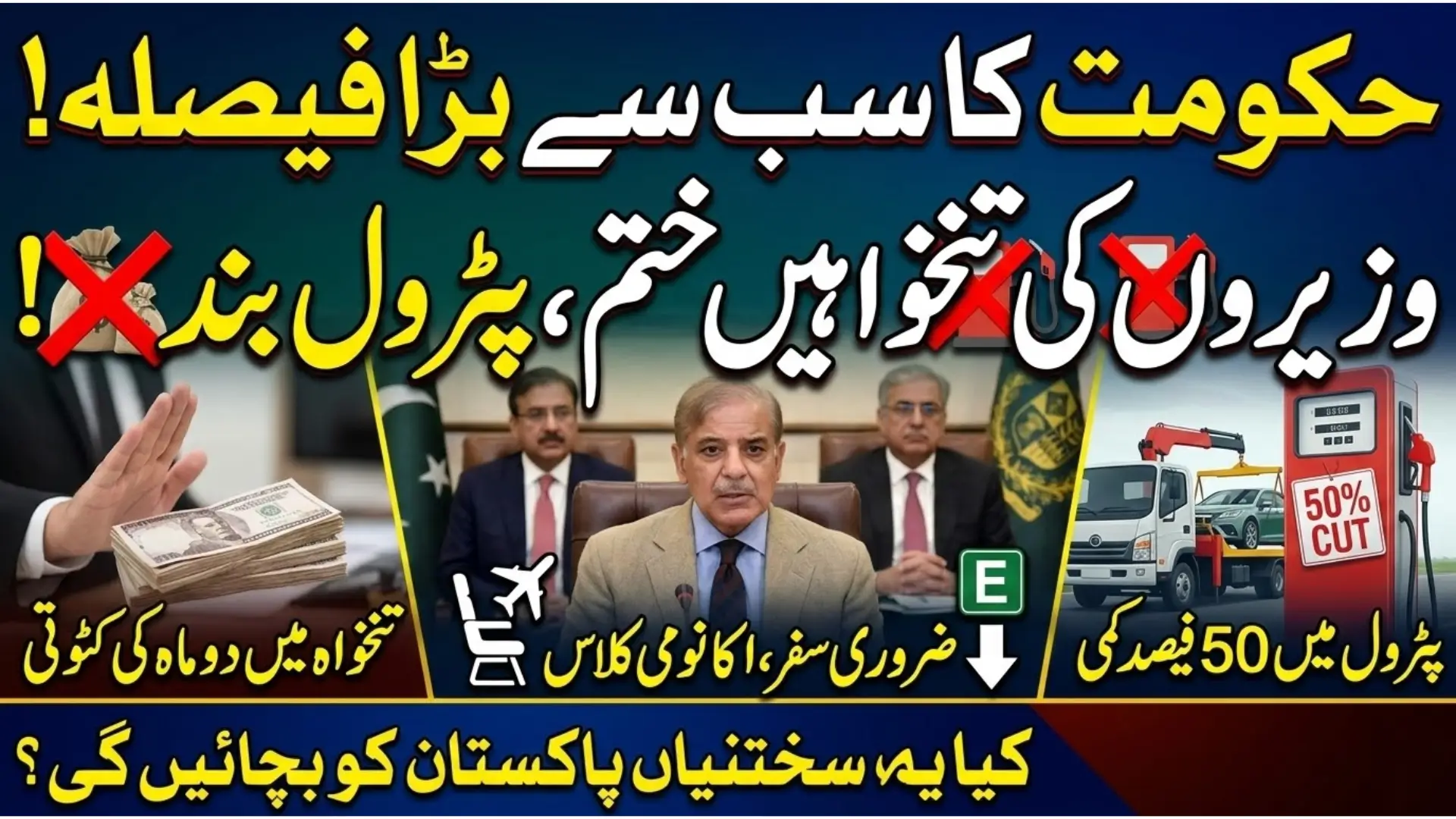
Pakistan Austerity Policy 2026
The federal government has introduced a new Pakistan austerity policy to reduce national expenses during economic pressure linked to the ongoing war situation. The policy was approved in a high-level meeting chaired by Prime Minister Shehbaz Sharif. Officials said the plan focuses on lowering administrative costs, limiting travel, and reducing unnecessary spending in government departments.
The policy also aims to show financial discipline at the leadership level. Ministers and senior officials will contribute through salary reductions. At the same time, departments must adopt digital communication and careful budget management. Key goals of the policy include:
- Reducing government operational costs
- Managing fuel and transport expenses
- Improving financial discipline in public institutions
Pakistan 5G Spectrum Auction Start 2026: First Round Completed with Strong Telecom Bidding
Salary Cuts for Ministers and Senior Government Officials
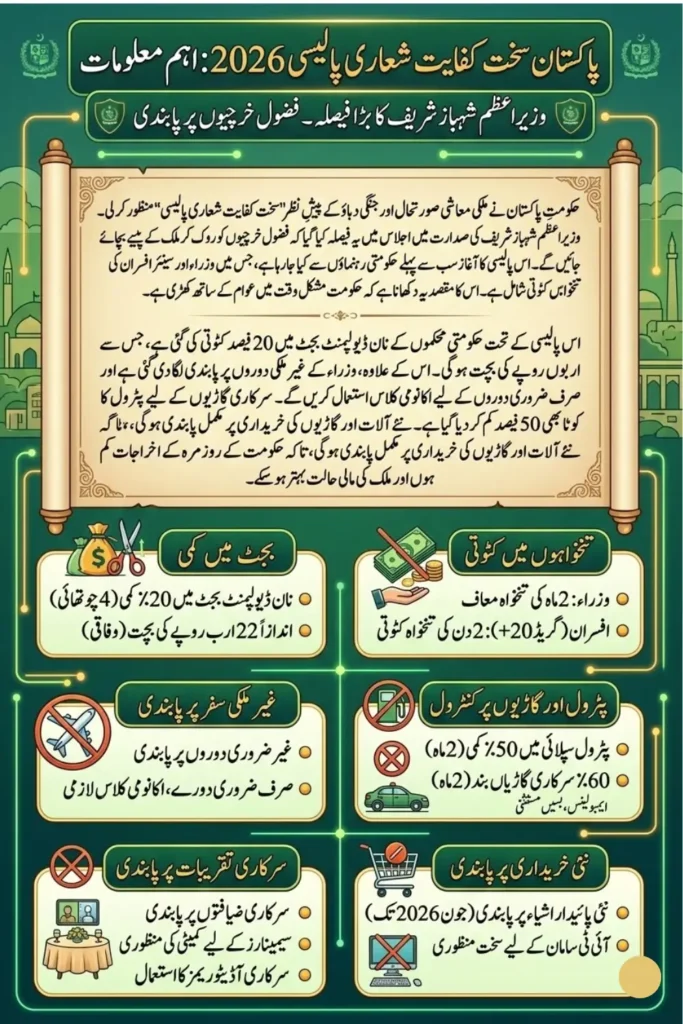
Under the Pakistan austerity policy, ministers, advisers, and special assistants at federal and provincial levels will give up two months of salaries and allowances. This step is described as a voluntary contribution to support national financial stability. The move is meant to set an example of responsibility among government leadership.
Senior officials will also face deductions. Government officers in Grade 20 and above who earn more than Rs. 300,000 per month will lose the equivalent of two days’ salary. These deductions are part of wider efforts to control spending and show solidarity during economic pressure. The salary policy includes:
- Two months’ salary waiver for ministers and advisers
- Two-day salary deduction for Grade 20+ officials
- Application to both federal and provincial leadership
Budget Reductions Across Government Departments
The government has approved a 20 percent reduction in the non-development budgets of all departments for the fourth quarter of the fiscal year. This reduction will apply to both federal and provincial institutions. Officials estimate that the measure could save around Rs. 22 billion at the federal level.
Departments have been instructed to review their expenses and cut unnecessary costs. Only essential operational spending will continue. The government believes this step will reduce pressure on public finances while maintaining important services. Major financial changes include:
- 20 percent cut in non-development spending
- Implementation during the final fiscal quarter
- Estimated Rs. 22 billion savings at federal level
Pakistan Government Work-From-Home Policy and Four-Day Work Week Amid Fuel Crisis
| Financial Measure | Expected Impact |
|---|---|
| Non-development budget reduction | Rs. 22 billion savings |
| Fuel supply cut for vehicles | Rs. 4.5 billion savings |
Ban on Government Procurement and Durable Goods
To prevent unnecessary spending, the government has banned the purchase of new durable goods until June 2026. This includes office equipment, machinery, and other long-term assets. Officials believe this restriction will limit extra spending and support fiscal discipline.
Information technology purchases will follow a stricter approval process. Departments must obtain permission from the National Information Technology Board and the relevant strategy committee before buying IT equipment. These steps ensure that only essential purchases are approved. Key procurement restrictions include:
- Ban on new durable goods purchases
- Approval required for IT equipment procurement
- Policy valid until June 2026
Restrictions on Official Foreign Travel
The Pakistan austerity policy also restricts official foreign visits for government officials. Cabinet members, parliamentarians, and other officials are not allowed to travel abroad unless the visit is essential for national interest. This step aims to reduce travel expenses and limit unnecessary trips.
All officials who must travel abroad will use economy class regardless of funding sources. This rule applies to government-funded and externally funded trips. The policy promotes cost-effective travel and accountability in official spending. Major travel restrictions include:
- Ban on unnecessary official foreign visits
- Only essential trips allowed
- Mandatory economy-class travel for officials
Fuel Reduction and Government Vehicle Restrictions
Fuel usage for government vehicles will be reduced by 50 percent for the next two months. The measure is expected to save about Rs. 4.5 billion at the federal level. Essential vehicles such as ambulances, public buses, and motorcycles used for operations are exempt.
In addition, around 60 percent of federal and provincial government vehicles will remain off the road during the same period. The policy is designed to lower fuel consumption and reduce operational expenses. The vehicle policy includes:
- 50 percent reduction in fuel supply
- 60 percent of government vehicles temporarily inactive
- Exemptions for emergency and operational vehicles
| Vehicle Policy | Duration | Exemptions |
|---|---|---|
| Fuel quota reduction | 2 months | Ambulances, buses, motorcycles |
| Government vehicle restriction | 2 months | Operational vehicles |
Promotion of Virtual Meetings and Administrative Efficiency
The government has encouraged departments to conduct teleconferencing and virtual meetings. This approach will reduce travel costs and event expenses. Digital communication will replace many physical meetings and conferences.
Officials have also expanded the right-sizing program to reduce administrative costs. Government departments must focus on efficiency and avoid unnecessary gatherings. The digital governance plan includes:
- Increased use of teleconferencing
- Reduction in travel for official meetings
- Continuation of right-sizing reforms
Ban on Official Banquets and Event Spending
Another key step in the Pakistan austerity policy is the ban on official banquets. Government departments cannot organize official dinners or expensive receptions. The only exception is when foreign delegations visit the country.
Seminars, conferences, and training programs will require prior approval from a special committee. Departments must use government auditoriums and facilities instead of hotels or private venues. This ensures that events remain necessary and cost-effective. Key rules include:
- Ban on official banquets
- Committee approval for seminars and conferences
- Use of government venues for events
Conclusion
Pakistan’s new austerity policy reflects the government’s effort to manage national finances during economic pressure. Salary cuts, spending reductions, and operational restrictions aim to reduce unnecessary costs. Officials believe these measures will help maintain fiscal stability.
The policy also promotes responsible governance and efficient administration. Digital meetings, reduced travel, and strict procurement rules will help control expenses. Together, these steps are designed to protect public resources during challenging economic conditions.
FAQs
What is Pakistan austerity policy 2026?
It is a government plan to reduce spending through salary cuts, budget reductions, and operational restrictions.
Who will face salary deductions under the policy?
Ministers will give up two months’ salaries while Grade 20 and above officers will lose two days’ salary.
How much budget reduction is expected from the policy?
The government expects to save around Rs. 22 billion from departmental budget cuts.
Are foreign trips allowed under the austerity policy?
Only essential official trips are allowed and all officials must travel in economy class.
How long will fuel restrictions on government vehicles remain?
Fuel supply reductions and vehicle restrictions will remain in place for two months.