
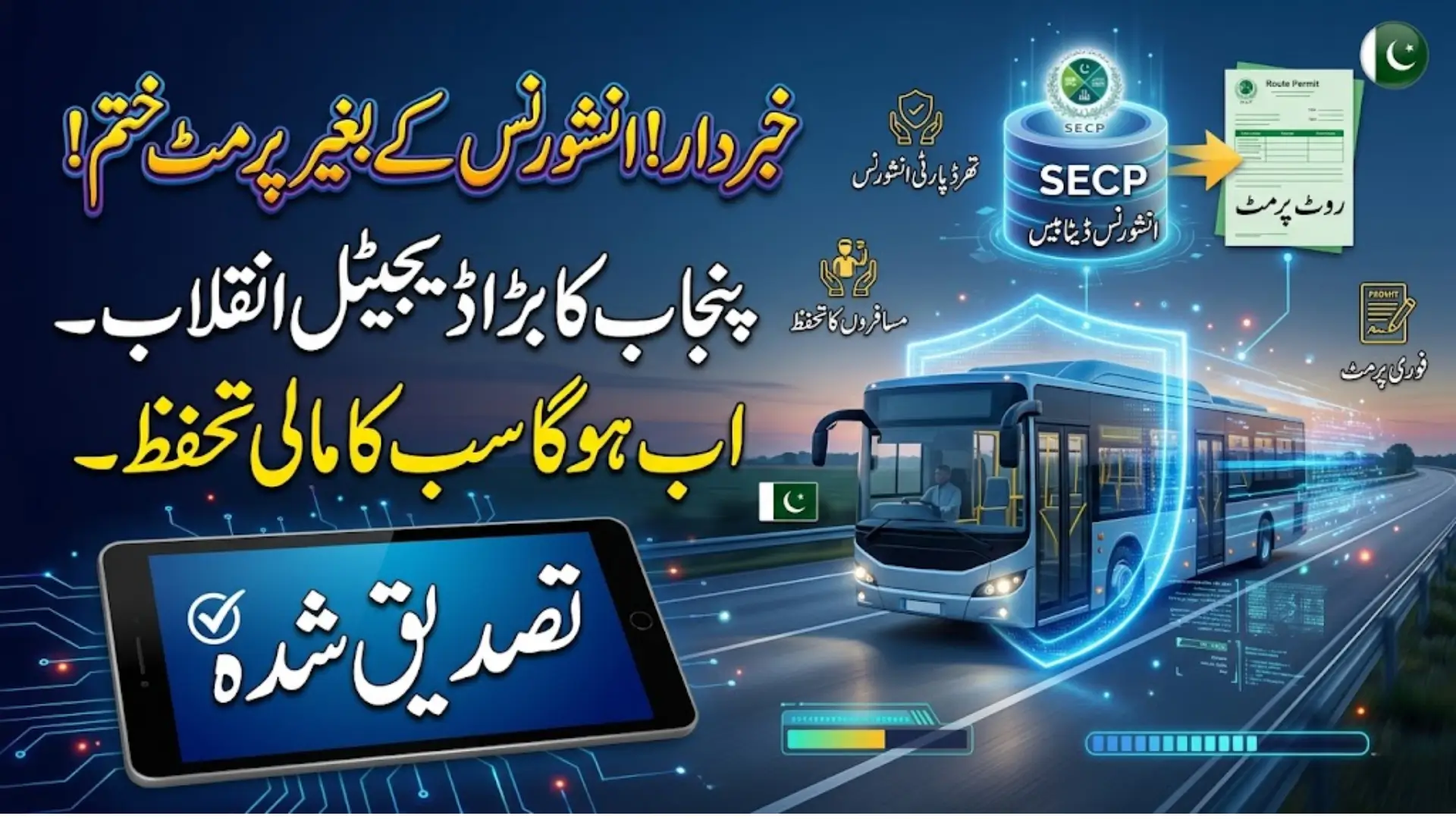
Punjab Public Transport Insurance
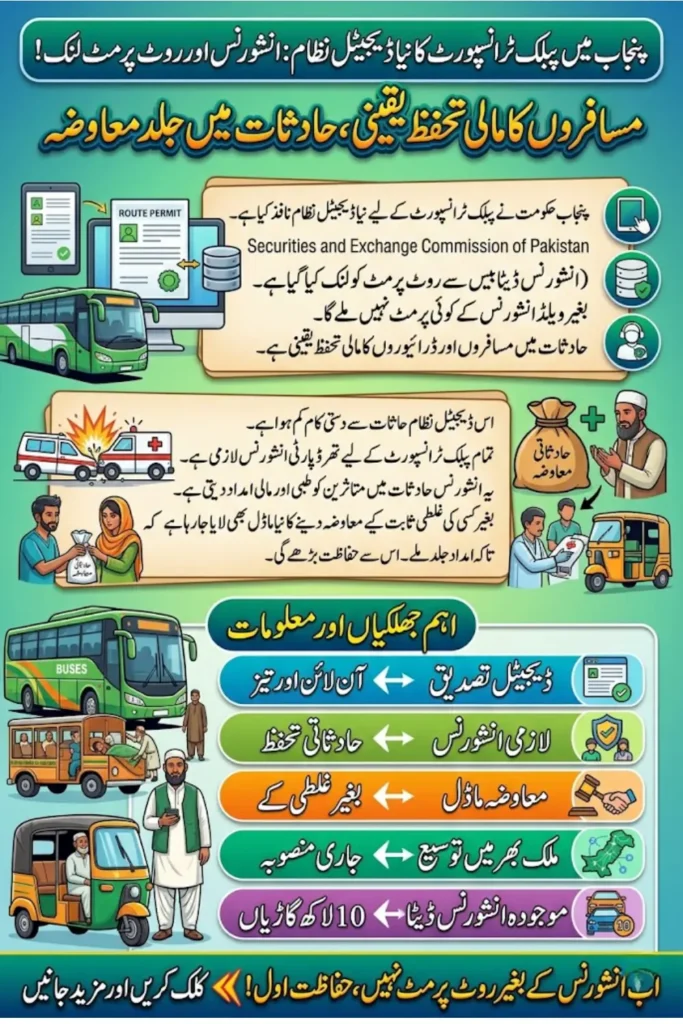
Punjab has made its public transport system fully digital by linking route permits with the insurance repository of the Securities and Exchange Commission of Pakistan (SECP). This allows authorities to verify third-party motor insurance for public transport vehicles across the province quickly. The system aims to improve safety and provide financial protection to passengers and drivers in case of accidents.
The new digital framework also reduces manual processes for transport operators. All route permits and renewals now require proof of valid insurance, making compliance easier to monitor. Authorities say this step will strengthen regulation and enhance accountability in the public transport sector.
Launch of the Digital System
The integration was formally launched at SECP, marking the start of a fully digital verification process. Transport operators can now submit insurance details electronically, and officials can instantly confirm coverage. This reduces paperwork and speeds up the route permit process.
Key points of the digital system include:
- Real-time verification of third-party insurance
- Direct link between route permits and insurance
- Faster approvals and renewals for compliant operators
Officials say this system modernizes the transport sector and ensures that only insured vehicles operate on public routes. It also helps authorities identify vehicles with expired or missing insurance.
Third-Party Insurance Made Mandatory
Under the new rules, all public transport vehicles in Punjab must have third-party motor insurance. Transport operators cannot obtain or renew their route permits without proof of valid coverage.
Important aspects of the mandate:
- Mandatory for all public transport vehicles
- Proof required for permit issuance and renewal
- Helps enforce safety and financial protection standards
This measure ensures that passengers and other road users are financially protected in case of accidents. Operators who fail to comply face penalties and cannot legally operate their vehicles.
Rawalpindi Board Online Monitoring System Ensures Transparency in Matric Exams 2026
Financial Protection for Passengers and Drivers
The policy is designed to provide financial security to accident victims. Third-party insurance ensures that passengers, drivers, and third parties receive timely compensation. Dr. Kabir Sidhu emphasized that this move will protect individuals affected by road accidents.
Key benefits include:
- Compensation for medical and property damage
- Reduced financial burden on accident victims
- Encourages responsible driving and insurance compliance
By linking insurance to route permits, authorities aim to prevent uninsured vehicles from operating, which enhances overall road safety.
Current Insurance Coverage and Limitations
Currently, the insurance repository contains data for around one million vehicles. However, this coverage is limited compared to the total number of vehicles in Pakistan. Authorities are taking steps to expand the system nationwide.
Table: Insurance Coverage in Punjab
| Parameter | Details |
|---|---|
| Vehicles in Repository | 1,000,000 |
| Coverage vs Total Vehicles | Limited |
| Expansion Plan | Ongoing nationwide integration |
Officials acknowledge that wider insurance adoption is necessary to ensure complete protection for all passengers. They are also working to make the registration process simpler for operators.
Proposed Legal Reforms
Authorities have proposed amendments to federal laws to strengthen enforcement of third-party insurance. The new system is expected to follow a “no-fault” compensation model. This ensures victims receive timely financial aid regardless of who caused the accident.
Key aspects of the legal reform:
- Federal law amendments for enforcement
- No-fault insurance model
- Faster compensation for accident victims
The reform will further improve accountability in the transport sector. It also encourages operators to maintain valid insurance at all times.
Impact on Public Transport Operators
Transport operators benefit from faster and more transparent permit issuance. The digital system reduces administrative delays and ensures only insured vehicles are allowed on the road.
Expected impacts include:
- Streamlined route permit processing
- Reduced manual paperwork
- Stronger compliance with insurance requirements
Operators are now motivated to maintain continuous insurance coverage to avoid operational disruptions. This contributes to safer and more reliable public transport services in Punjab.
FAQs
What is the Punjab public transport insurance digital system?
It is a system linking route permits with SECP insurance data to verify third-party motor insurance for public transport vehicles.
Is third-party insurance mandatory for public transport in Punjab?
Yes, all public transport vehicles must have third-party insurance to obtain or renew route permits.
How does the no-fault insurance model work?
Victims of accidents receive compensation regardless of who caused the accident, ensuring timely financial support.
How many vehicles are currently covered by the insurance repository?
Approximately one million vehicles are registered, but coverage is still limited compared to total vehicles in the country.
Will legal reforms affect insurance enforcement?
Yes, federal law amendments are proposed to ensure stricter compliance and faster compensation for accident victims.
Educational Boards E-Marking System Pakistan Nationwide Implementation Check Official Statement