
Sindh Emergency Services Modernization Plan
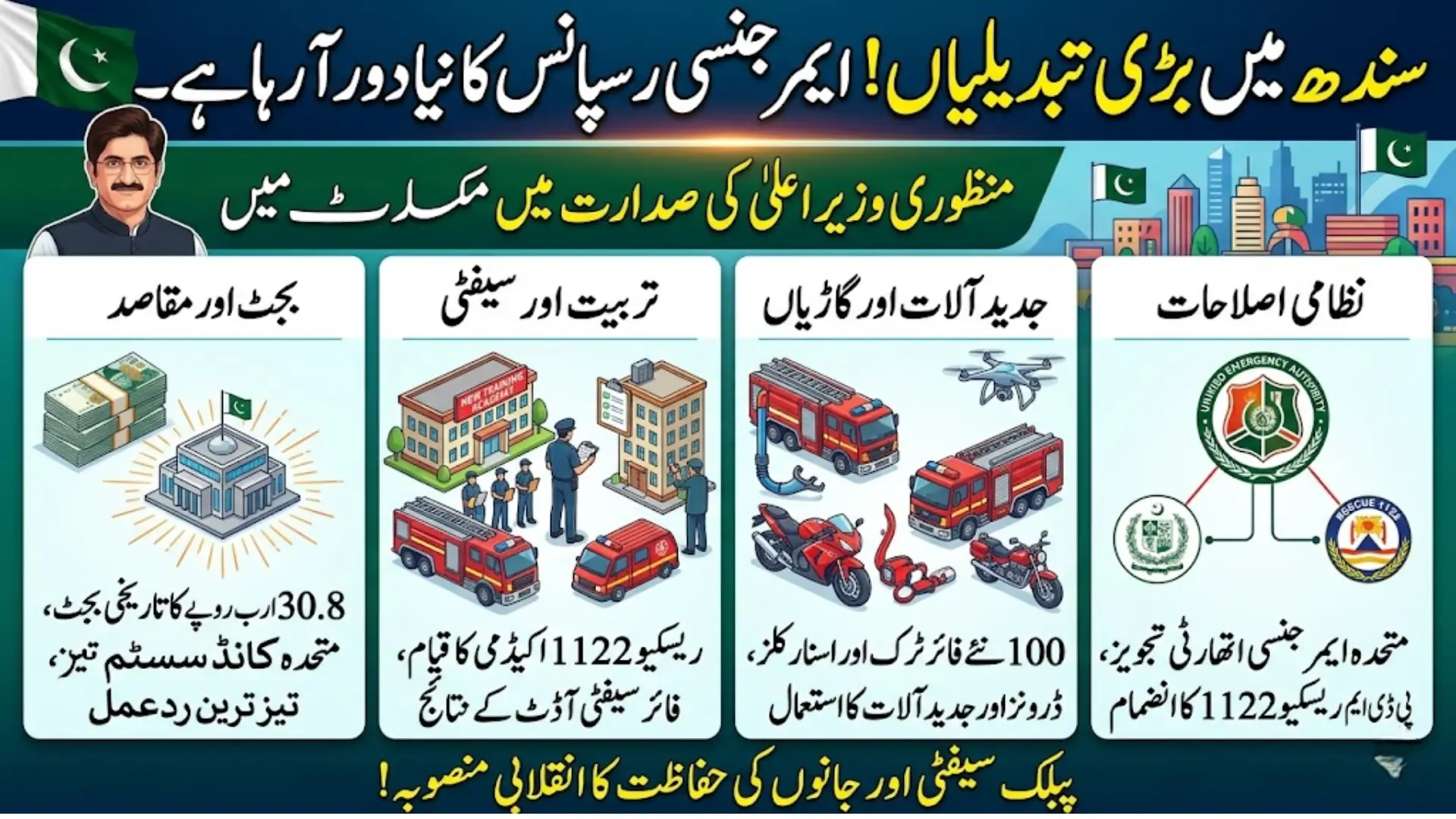
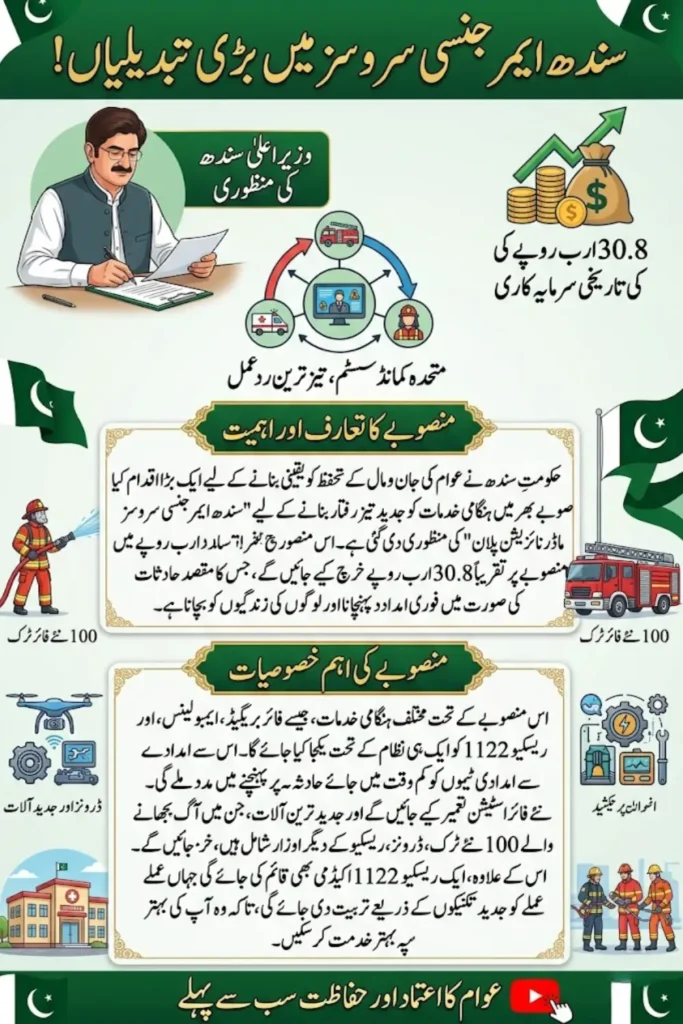
The Sindh Emergency Services Modernization Plan is a major step to improve public safety. The government has approved Rs30.8 billion for this project. The aim is to build a fast and efficient emergency response system.
This plan focuses on creating a unified command structure. It will connect different emergency services under one system. This will help reduce response time and improve coordination.
- Rs30.8 billion approved
- Focus on integrated services
- Faster emergency response
Approval by Syed Murad Ali Shah
Syed Murad Ali Shah approved the modernization plan during a high-level meeting. His decision reflects the government’s focus on safety and disaster management. The plan aims to protect lives and property across Sindh.
The chief minister also stressed the need for strict implementation. He directed departments to work together for better results. This leadership plays a key role in improving emergency systems.
- Approved by chief minister
- Focus on public safety
- Strong leadership role
Key Officials and High-Level Meeting
The decision was made in a meeting attended by senior officials. Important names include Murtaza Wahab, Asif Hyder Shah, Muzamel Halepoto, and Salman Shah. Their presence shows strong coordination.
Such meetings help in better planning and decision-making. It ensures that all departments are aligned. This improves the success rate of large projects.
- Senior officials participated
- Strong coordination
- Better planning process
Investment in Modern Equipment
A large part of the budget will be used to buy modern equipment. The government will purchase 100 fire trucks and other advanced vehicles. These include snorkels, aerial ladders, and fire bikes.
Modern tools will improve rescue operations. Drones and all-terrain vehicles will help reach difficult areas. This investment will make emergency services more effective.
Rawalpindi Board Online Monitoring System Ensures Transparency in Matric Exams 2026
| Equipment Type | Quantity/Details |
|---|---|
| Fire Trucks | 100 |
| Drones | Included |
| Fire Bikes | Included |
| Aerial Ladders | Included |
- Purchase of modern vehicles
- Use of drones and tools
- Better emergency access
Advanced Rescue Tools and Technology
The plan also includes advanced rescue tools. These tools will help in complex rescue situations. Technology will play a key role in saving lives.
Thermal imaging cameras and breathing devices will support rescue teams. Life-detection systems will help locate trapped people. These tools will improve efficiency and safety.
- Thermal imaging cameras
- Breathing apparatus
- Life-detection systems
Expansion of Fire Stations and Training Facilities
New fire stations will be built across Sindh. This will increase coverage and reduce response time. More stations mean better service for the public.
A Rescue 1122 academy will also be established. This academy will train staff with modern techniques. It will strengthen institutional capacity.
- New fire stations planned
- Rescue 1122 academy
- Improved training system
Punjab Government Helpline Numbers for Citizens’ Assistance and Relief Programs
Province-Wide Fire Safety Audit Results
A fire safety audit was conducted across Sindh. A total of 3,340 buildings were inspected. This exceeded the original target.
The results show improvement in safety compliance. Many buildings are now safer than before. The number of high-risk buildings has reduced.
| Audit Detail | Result |
|---|---|
| Buildings Inspected | 3,340 |
| Compliant Buildings | 43% |
| High-Risk Reduction | 33% to 22% |
- Large-scale inspections
- Improved compliance
- Reduced risk levels
Enforcement Actions and Safety Measures
Authorities took strict action after the audit. Dangerous buildings were sealed. Over 3,000 notices were issued to ensure safety rules are followed.
These actions help improve public safety. Regular inspections will continue in the future. This ensures long-term compliance.
- Buildings sealed
- 3,000+ notices issued
- Strong enforcement
Proposal for Unified Emergency Authority
A new unified emergency authority has been proposed. This authority will manage all emergency services. It will work as an autonomous body.
PDMA Sindh and Rescue 1122 will be key parts of this system. This integration will improve coordination. It will also reduce delays in response.
- Unified authority proposed
- PDMA and Rescue 1122 included
- Better coordination
Structural Reforms in Emergency Services
The plan includes major structural changes. Local fire services and civil defense will be integrated. Emergency health services will also be included.
This will create a single administrative system. It will make operations more efficient. All services will work under one command.
- Integration of services
- Centralized system
- Improved efficiency
Legislative Framework for Implementation
A legal framework will be developed to support the plan. A five-member committee has been formed. It is headed by the Advocate General of Sindh.
This committee will prepare laws for implementation. Legal support is important for long-term success. It ensures proper structure and accountability.
- Committee formed
- Legal framework in progress
- Structured implementation
Vision for Public Safety and Future Impact
The main goal is to protect lives and property. The government wants a strong emergency system. Regular inspections and strict laws will support this goal.
This plan will improve disaster response in Sindh. It will also build public trust. Better services will lead to a safer environment.
- Focus on safety
- Long-term benefits
- Strong emergency system
FAQs
What is the Sindh Emergency Services Modernization Plan?
It is a Rs30.8 billion initiative to improve emergency services. It focuses on integration and modern technology.
What equipment will be purchased under this plan?
The government will buy fire trucks, drones, and rescue tools. These will improve response and rescue operations.
What is the purpose of the unified emergency authority?
It will combine all emergency services under one system. This will improve coordination and response time.
How will this plan benefit the public?
It will provide faster emergency response and better safety. It will also reduce risks in buildings and public areas.
Petrol Subsidy App Pakistan Ready for Launch: Cheap Fuel Plan for Low-Income Citizens