
Pakistan Electricity Tariff Changes 2026
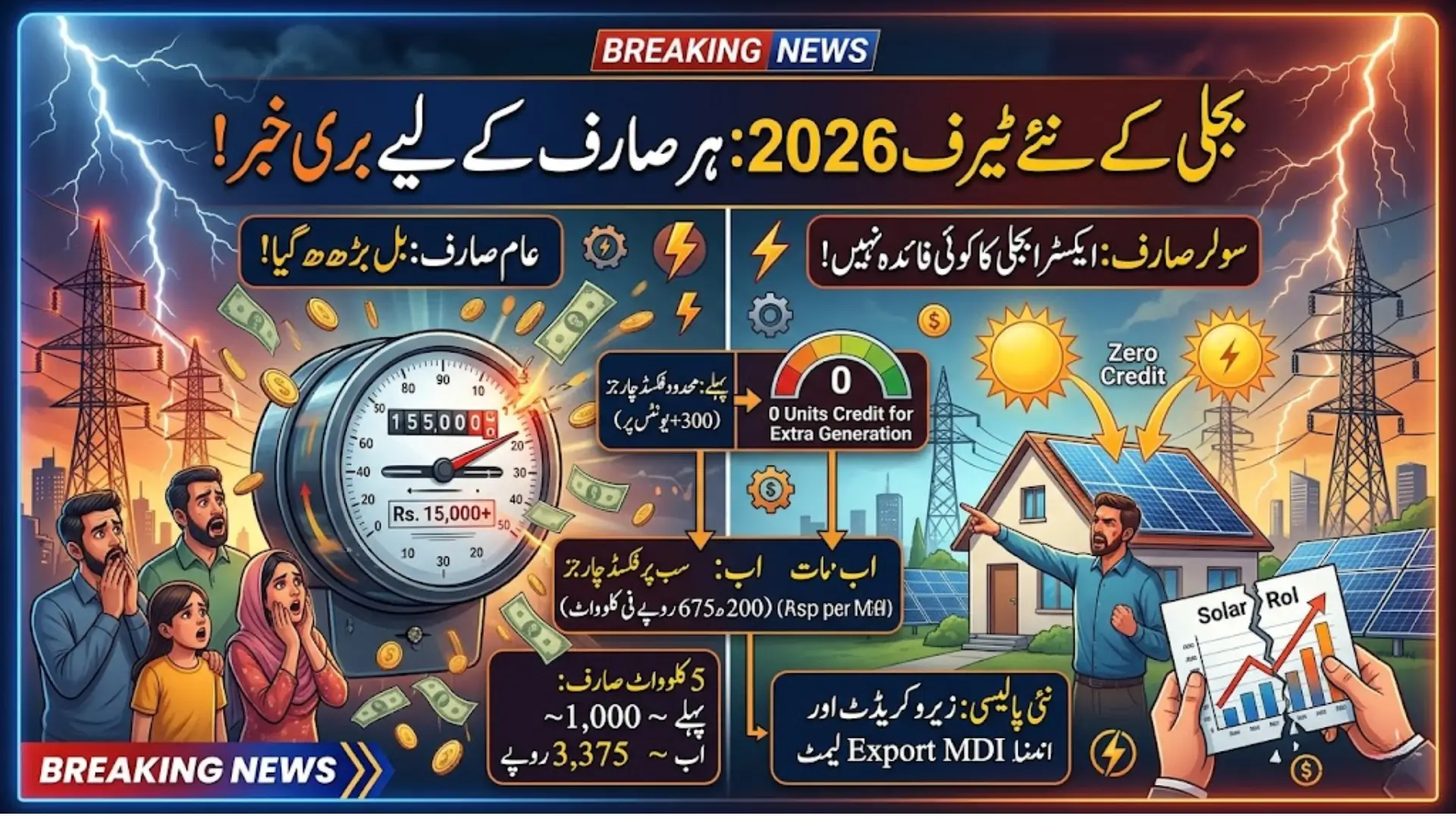
Pakistan Electricity Tariff Changes 2026 have created concern among consumers. The government has introduced new billing rules for both solar users and regular electricity consumers. These changes aim to control the energy system but have increased financial pressure.
The new system affects how electricity bills are calculated. It also reduces benefits for solar panel users. Many households are now facing higher monthly costs.
- New billing structure introduced
- Impact on solar and regular users
- Increase in electricity expenses
Sindh Emergency Services Modernization Plan: Rs30.8 Billion Approved for Unified Rescue System
Changes in Solar Net Metering Policy
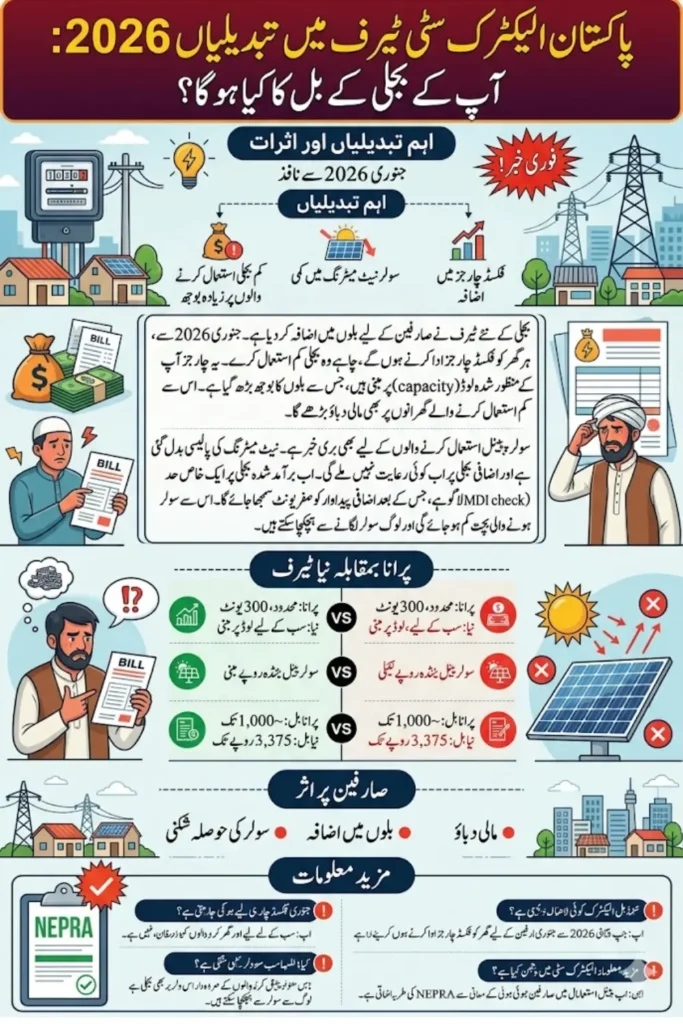
The government has revised the solar net metering policy. Relief on excess electricity production has been removed. This change directly affects solar panel users.
A new Export MDI check has been applied. It limits the amount of electricity that can be credited. Any extra production beyond approved limits will not be counted.
- No relief on extra electricity
- Export MDI system applied
- Strict limits on solar generation
Impact on Solar Panel Consumers
Solar users will no longer receive credit for excess electricity. Units produced beyond approved capacity will be treated as zero. This reduces financial benefits for solar investments.
This change discourages installing extra panels. Many users who expanded systems will not get returns. It increases the payback period of solar systems.
- Zero credit for extra units
- Reduced savings for users
- Lower return on investment
Punjab 8th Class Result Date 2026 Time, and Online Checking Guide
Role of Distribution Companies in New Policy
Distribution companies have been given clear instructions. They must implement the new billing rules strictly. All excess electricity will be recorded as zero units.
These companies will monitor approved limits closely. This ensures compliance with the updated policy. It also standardizes billing across the country.
- Strict policy implementation
- Monitoring of solar limits
- Uniform billing system
Introduction of Fixed Charges in New Tariff System
The new tariff system introduces fixed charges for all consumers. These charges are now based on sanctioned load instead of usage. This is a major shift in billing method.
The new system came into effect in January 2026. It changes how electricity costs are calculated. Consumers now pay based on capacity, not only consumption.
- Fixed charges for all users
- Based on sanctioned load
- Effective from January 2026
NEPRA’s Approval of Tariff Changes
The tariff changes were approved by the National Electric Power Regulatory Authority. The approval was given after a request from the federal government. This step was taken to restructure the energy sector.
The goal is to ensure stable revenue for power companies. However, it has increased costs for consumers. Many people are concerned about affordability.
- Approved by NEPRA
- Requested by government
- Focus on energy sector reforms
kp Four-Day School Week While Punjab Resumes Five-Day Check Schedule
Comparison with Previous Billing System
Previously, fixed charges applied only to high-usage consumers. Only those using more than 300 units had to pay extra charges. These charges ranged between Rs. 200 and Rs. 1,000.
Now, almost all consumers must pay fixed charges. Even low-usage households are affected. This marks a major shift in policy.
| Feature | Old System | New System |
|---|---|---|
| Fixed Charges | Limited users | Almost all users |
| Basis of Billing | Consumption | Sanctioned load |
| Cost Impact | Lower | Higher |
- Earlier limited charges
- Now applied widely
- Increased cost burden
Revised Fixed Charges Structure
Fixed charges have been increased significantly. They now range from Rs. 200 to Rs. 675 per kilowatt per month. This depends on the consumer category.
Higher sanctioned load means higher fixed charges. This impacts households with larger connections. Even if usage is low, charges remain high.
- Rs. 200 to Rs. 675 per kW
- Based on load capacity
- Higher bills for bigger loads
Impact on Household Electricity Bills
Households are facing higher electricity bills under the new system. Even with low usage, fixed charges increase total cost. This creates financial stress.
For example, a 5 kW consumer may now pay up to Rs. 3,375 in fixed charges. Earlier, the maximum was around Rs. 1,000. This shows a sharp increase.
Pak Suzuki Ravi Pickup Pakistan Potential Comeback of the Popular Commercial Vehicle in 2026
| Sanctioned Load | Old Charges (Rs.) | New Charges (Rs.) |
|---|---|---|
| 5 kW | Up to 1,000 | Up to 3,375 |
- Higher bills for all users
- Increased burden on households
- Low usage no longer saves money
Financial Pressure on Consumers
The new tariff system adds pressure on consumers. Many families are already dealing with rising living costs. Increased electricity bills make it harder to manage expenses.
Solar users are also affected due to reduced benefits. This change reduces savings from renewable energy. It may slow down solar adoption.
- Increased cost of living
- Reduced solar benefits
- More financial stress
Overall Impact of Pakistan Electricity Tariff Changes 2026
The Pakistan Electricity Tariff Changes 2026 have changed the energy system. Billing is now based more on capacity than usage. This affects how consumers manage electricity.
The policy also impacts renewable energy growth. Reduced incentives may discourage solar investment. Long-term effects will depend on future adjustments.
- Shift in billing method
- Impact on solar growth
- Long-term economic effects
JMEV EV3 Pakistan Launch Capital Smart Motors Enters Small EV Segment Check Now
FAQs
What are Pakistan Electricity Tariff Changes 2026?
These are new billing rules that include fixed charges and revised solar policies. They increase electricity costs for many users.
How do the new solar rules affect consumers?
Extra electricity beyond approved limits is not credited. This reduces savings from solar systems.
What are fixed charges in electricity bills?
Fixed charges are costs based on sanctioned load. They must be paid regardless of electricity usage.
Why are electricity bills increasing in Pakistan?
Bills are rising due to higher fixed charges and new tariff rules. Reduced solar benefits also add to the cost.