
KP Electric Scooters for Women Scheme
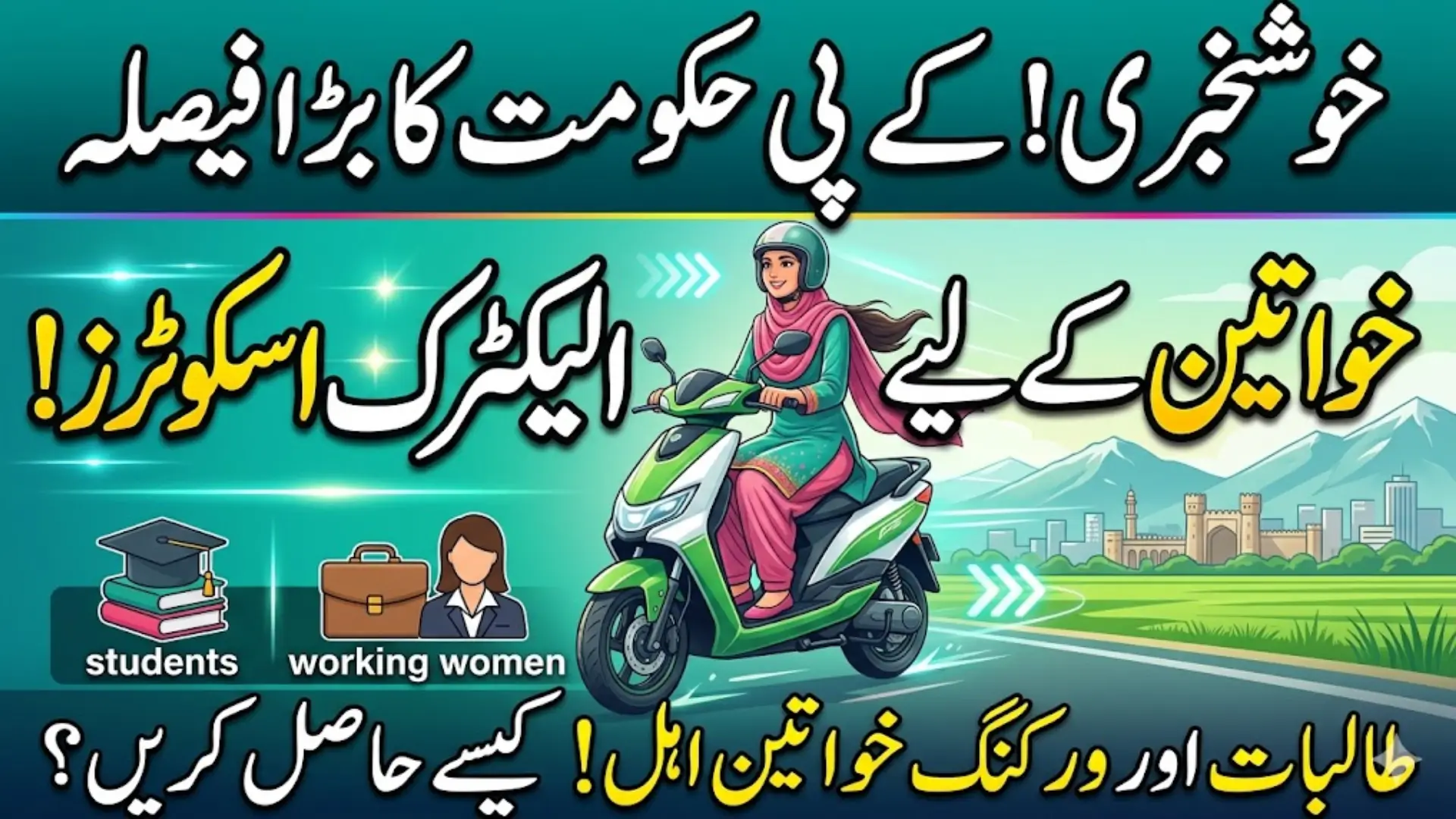
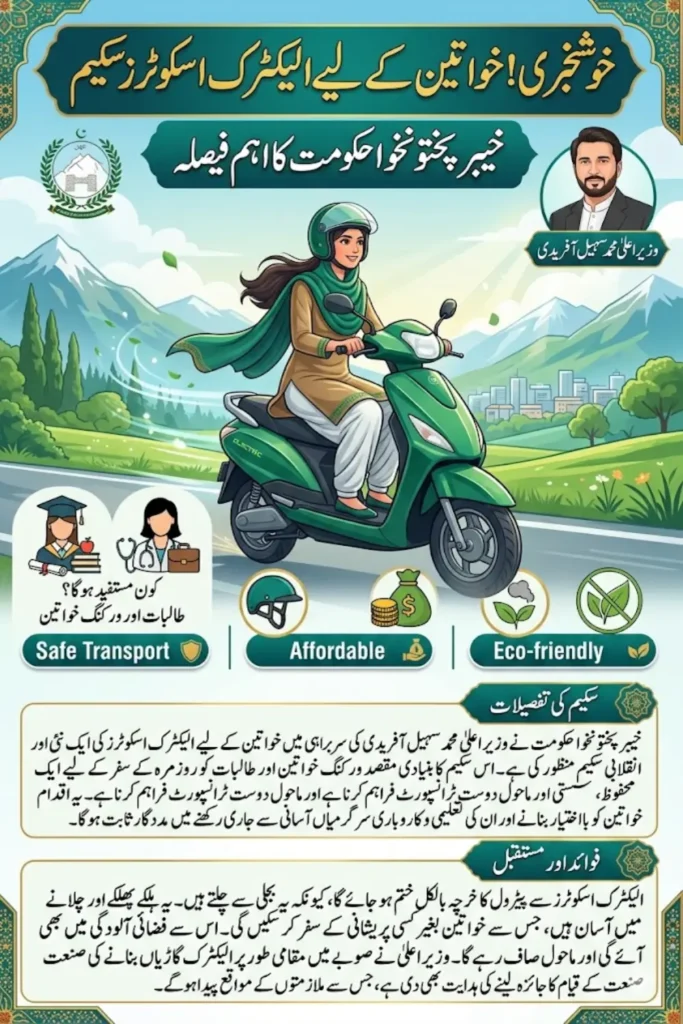
The Khyber Pakhtunkhwa government has approved a new scheme to provide electric scooters for women across the province. The initiative covers working women and female students. It aims to make daily travel safe, affordable, and environmentally friendly.
Decision Taken During ADP 2026-27 Review Meeting
The decision was made in a key planning session of the Planning and Development Department. Chief Minister Muhammad Sohail Afridi chaired the meeting. The session focused on reviewing proposals for the Annual Development Program (ADP) 2026-27.
Officials presented several development proposals during the session. The electric scooter scheme received formal approval at this stage. This places the initiative within the province’s official budget and development framework for the coming year.
NADRA Identity Management System Major Regulatory Reforms Check Now
Who Will Benefit from the Electric Scooters for Women in KP?
The scheme directly targets two key groups in Khyber Pakhtunkhwa. Both groups face daily challenges with transport access. The initiative is designed to remove those barriers in a practical way.
- Working women who commute to offices, hospitals, schools, or businesses
- Female students traveling to colleges, universities, or vocational centers
- Women living in areas with limited or expensive public transport options
Officials confirmed the scheme aims to support women’s access to safe transport. Affordability is a key factor in the design of the program. Electric scooters reduce the cost of daily commuting compared to conventional fuel-based vehicles.
Promoting Eco-Friendly Transport Through Electric Mobility
The KP government has chosen electric scooters as a deliberate step toward cleaner transport. Petrol-powered vehicles contribute heavily to urban air pollution. Switching to electric alternatives lowers emissions and supports environmental goals.
Electric scooters produce zero direct emissions during use. They also have lower running costs compared to fuel vehicles. This makes them a practical long-term solution for daily commuters across KP districts.
- No fuel cost — runs on electricity, reducing monthly transport expenses
- Lower maintenance costs compared to petrol or CNG-powered bikes
- Contributes to cleaner air in cities and towns of Khyber Pakhtunkhwa
- Supports Pakistan’s broader shift toward sustainable energy and transport
Karobar Card By Maryam Nawaz For Small Business Owner In Punjab
| Feature | Electric Scooter | Conventional Petrol Bike |
|---|---|---|
| Fuel/Energy Cost | Low (electricity) | High (petrol/CNG) |
| Emissions | Zero direct emissions | CO2 and particulate matter |
| Maintenance | Low (fewer moving parts) | Higher (engine servicing) |
| Noise Level | Very low | Moderate to high |
| Suitability for Women | Lightweight and easy to operate | Heavier, fuel management needed |
CM Afridi Directs Establishment of Local Electric Vehicle Manufacturing
Chief Minister Sohail Afridi went beyond approving the scheme. He gave a direct directive to explore setting up an electric bike and scooter manufacturing industry in the province. This shows a longer-term industrial vision tied to the transport initiative.
Establishing local manufacturing would reduce dependence on imported electric vehicles. It would also generate jobs and promote technological development in Khyber Pakhtunkhwa. Officials were asked to study the feasibility of this plan as a next step.
Safe and Affordable Transport: A Real Need for Women in KP
Women in Khyber Pakhtunkhwa face significant transport challenges. Public transport options are often irregular, crowded, or unavailable in smaller towns. This limits women’s ability to travel independently for work or education.
The electric scooter scheme addresses this gap directly. It gives women a personal, reliable, and low-cost vehicle. This increases their freedom of movement without relying on others or expensive private transport.
- Reduces dependence on male family members for commuting
- Allows women to set their own schedule for travel
- Makes remote educational and employment opportunities more reachable
PTA Sources Claim Almost 80% of Mobile Phones in Pakistan Are Ready for 5G Launch
Overview of the KP Electric Scooter Scheme at a Glance
The scheme carries several defining features that set it apart from general subsidy programs. It is specifically designed around women’s mobility needs in the province. Each element connects to a clear social or environmental goal.
| Scheme Detail | Information |
|---|---|
| Announced By | KP Planning and Development Department |
| Chaired By | Chief Minister Muhammad Sohail Afridi |
| Program Framework | Annual Development Program (ADP) 2026-27 |
| Target Beneficiaries | Working women and female students in KP |
| Transport Type | Electric scooters |
| Key Goals | Safe transport, eco-friendly mobility, women’s empowerment |
| Additional Directive | Explore local electric vehicle manufacturing in KP |
Empowering Women Through Modern Transport in Khyber Pakhtunkhwa
Access to transport is directly linked to women’s empowerment. When women can travel freely, they can pursue education and employment without barriers. The electric scooter scheme is as much a social initiative as it is a transport one.
Khyber Pakhtunkhwa has been gradually increasing its investment in women’s development. This scheme reflects that commitment in a practical and visible way. It sends a clear message that women’s mobility is a government priority.
Samsung Galaxy A57 Leaks Design Specs Camera and Release Date Details Check Now
What This Scheme Means for KP’s Development Future
The electric scooter initiative is part of a broader development direction for Khyber Pakhtunkhwa. It combines gender inclusion, environmental responsibility, and industrial growth in one policy decision. This multi-layered approach shows maturity in provincial planning.
If implemented well, the scheme could serve as a model for other provinces in Pakistan. It shows that transport policy can be targeted, eco-conscious, and socially inclusive at the same time. The addition of a local manufacturing directive adds long-term economic value to the program.
- Supports the United Nations Sustainable Development Goals (SDGs) on gender equality and clean energy
- Positions KP as a forward-thinking province in Pakistan’s transport landscape
- Creates potential for technology transfer and job creation through local EV manufacturing
Frequently Asked Questions (FAQs)
What is the KP electric scooter scheme for women?
It is a government initiative to provide electric scooters to working women and female students across Khyber Pakhtunkhwa. The scheme aims to improve their access to safe, affordable, and eco-friendly transport.
Who approved the electric scooter scheme in KP?
The decision was taken during a Planning and Development Department meeting chaired by Chief Minister Muhammad Sohail Afridi. It was reviewed under the Annual Development Program (ADP) 2026-27.
Who will receive electric scooters under this KP scheme?
The scheme targets working women and female students across Khyber Pakhtunkhwa. Both groups face daily transport challenges that this initiative aims to resolve.
Why did the KP government choose electric scooters specifically?
Electric scooters are eco-friendly, low-cost to operate, and easy to use. They support the government’s goal of promoting clean and modern transport alternatives in the province.
What did CM Afridi say about electric vehicle manufacturing in KP?
CM Afridi directed authorities to explore establishing an electric bike and scooter manufacturing industry in the province. The aim is to promote modern technology and support local production.
How does this scheme help empower women in Khyber Pakhtunkhwa?
It gives women personal and reliable transport, reducing dependence on others for commuting. This improves access to education, employment, and daily activities across the province.
BISP Check Balance Online via CNIC Updated Method for Checking BISP Balance 2026