
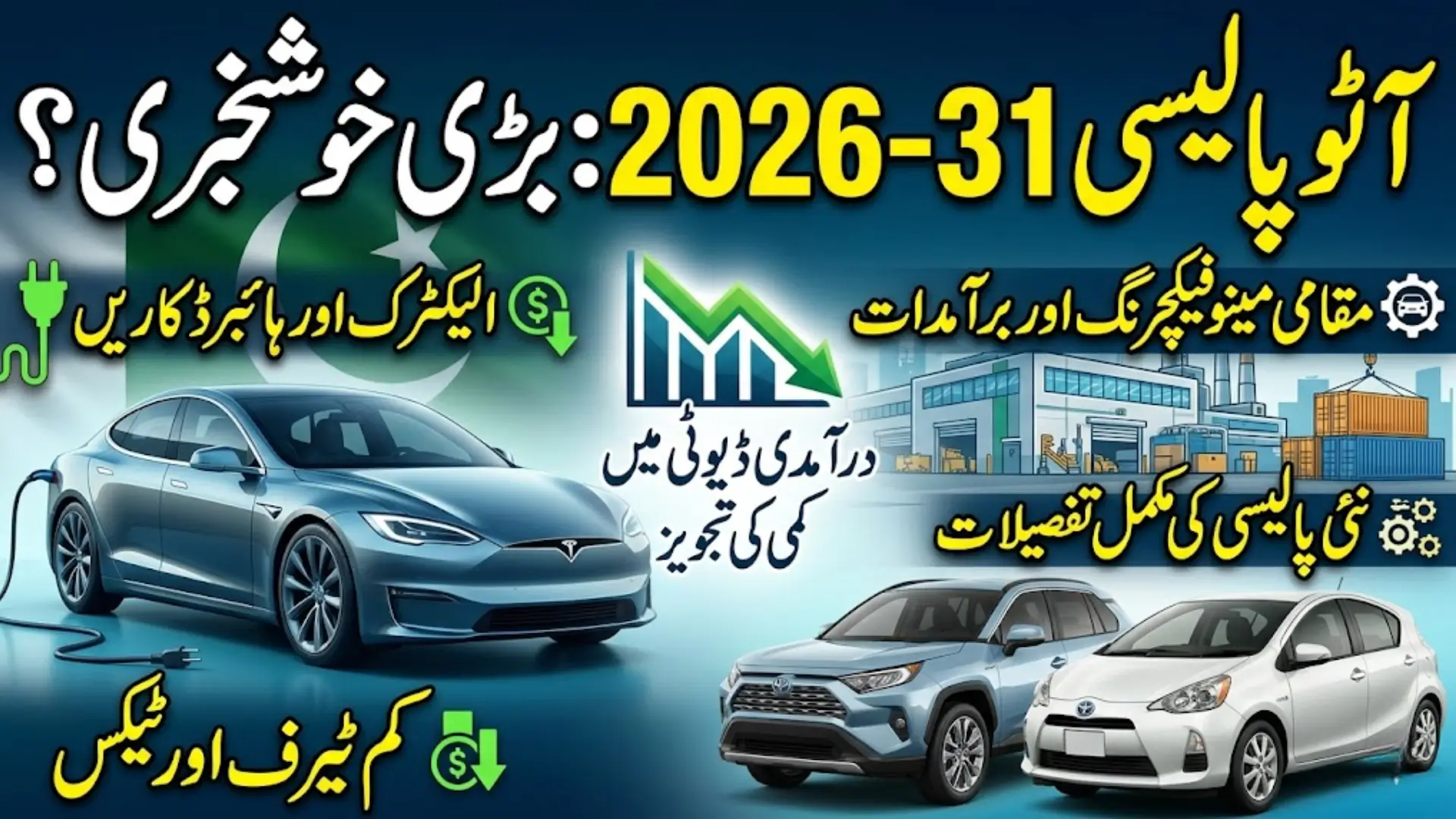
Pakistan Auto Policy 2026–31
The Pakistan Auto Policy 2026–31 is a proposed government plan to reform the automobile sector. It focuses on reducing import tariffs, supporting local manufacturing, and promoting electric vehicles. The policy is designed to make the auto industry more competitive and export-oriented.
This policy is still under review and has not been officially implemented. It is expected to go through IMF consultation and federal cabinet approval. If approved, it may start from July 1, 2026.
- Focus on tariff reduction and reforms
- Promotion of electric and hybrid vehicles
- Support for local auto industry growth
- Expected start from July 2026 (if approved)
Status and Approval Process of Pakistan Auto Policy 2026–31
The policy is currently in the proposal stage. It has been prepared for inclusion in the upcoming budget 2026–27. However, final approval is still pending from key authorities.
The policy will only become active after IMF review and cabinet approval. Until then, all measures remain proposed and not officially enforced.
- Policy is in draft stage
- IMF and cabinet approval required
- Expected implementation: July 2026
- Not yet legally active
Key Objectives of Pakistan Auto Policy 2026–31
The main goal of this policy is to modernize Pakistan’s auto sector. It aims to shift the industry from protection-based growth to competition-based growth.
Another objective is to increase exports and reduce dependency on imports. The government also wants to encourage electric vehicle adoption.
- Increase local manufacturing and assembly
- Boost auto exports up to $3 billion
- Promote EV and hybrid adoption
- Improve technology and competitiveness
Major Tariff Reduction Plan Under Auto Policy 2026–31
The policy proposes a gradual reduction in import tariffs. The weighted average tariff is expected to fall from 10.6% to around 7.4% by 2030. A simplified tariff system will replace the complex structure.
New tariff slabs are expected to make trade more transparent. The government also plans to phase out additional customs duties and regulatory duties.
- Tariff reduction from 10.6% to ~7.4%
- New slabs: 0%, 5%, 10%, 15%
- Gradual removal of extra duties
- More transparent import system
Table: Proposed Tariff Structure in Auto Policy 2026–31
| Category | Proposed Rate |
|---|---|
| Basic tariff slabs | 0%, 5%, 10%, 15% |
| Vehicle import duty cap | Up to 15% |
| Target weighted average | ~7.4% by 2030 |
Used Cars Import Policy and Regulatory Changes
Used car imports will also face changes under the new policy. The current high regulatory duty is expected to remain until June 2026. After that, a gradual reduction will begin.
By 2029–30, duties on used vehicles may reach zero. The government also plans to tighten rules to prevent misuse of gift and baggage schemes.
- 40% duty until June 2026
- Gradual yearly reduction after 2026
- Target: zero duty by 2029–30
- Stronger controls on import schemes
Khyber Pakhtunkhwa Digital Licence Management System Launched to Transform Driving Licence Process
Auto Parts Industry and Localization Strategy
The policy strongly focuses on local manufacturing of auto parts. Duties on components and assemblies will be reduced to lower production costs.
Existing systems like SRO 655(I)/2006 are expected to be phased out. This will simplify the auto parts import and manufacturing process.
- 5% duty on components
- 10% duty on assemblies
- Gradual removal of regulatory duties
- Promotion of local vendors and suppliers
Electric Vehicles (EVs) and Hybrid Incentives in Pakistan Auto Policy 2026–31
Electric vehicles are a key focus of this policy. The government aims to reduce dependence on fuel-powered cars and promote clean energy transport.
Special tax cuts and low import duties will support EV growth. Hybrid and new energy vehicles will also receive incentives.
Table: EV and Hybrid Incentives
| Category | Proposed Duty/Tax |
|---|---|
| EV parts | 1% duty |
| Hybrid parts | 5% duty |
| Hybrid sales tax | 9% |
| CKD units | 5%–10% duty |
- Strong incentives for EV manufacturing
- Lower import cost for EV parts
- Promotion of hybrid vehicles
- Support for clean energy transition
Impact on Local Car Manufacturers in Pakistan Auto Policy 2026–31
Local car manufacturers will face major changes under this policy. The government plans to reduce protection and increase competition.
Companies will be encouraged to improve exports and adopt new technologies. Performance-based incentives will replace old protection systems.
- Reduced protection for local assemblers
- Increased competition from imports
- Focus on exports and innovation
- Pressure to improve quality and efficiency
Production Targets and Economic Impact of Auto Policy 2026–31
The policy sets ambitious production and export targets. Pakistan aims to increase annual vehicle production significantly over the next five years.
It is also expected to create jobs and boost industrial growth. The auto sector may become a stronger contributor to exports.
- 50,000 vehicles in first year
- 500,000 units annual target
- $3 billion export goal
- Job creation in manufacturing sector
Pakistan Airport Authority Jobs 2026 Complete Guide to Apply Online and Eligibility Criteria
Implementation Timeline of Pakistan Auto Policy 2026–31
The policy is expected to be implemented from July 1, 2026. However, it depends on IMF review and final cabinet approval.
The changes will be introduced in phases until 2030. Full transition to the new system is expected by the end of the decade.
- Draft policy under review
- Approval required from IMF and cabinet
- Expected start: July 2026
- Full implementation by 2029–30
Conclusion of Pakistan Auto Policy 2026–31
The Pakistan Auto Policy 2026–31 is a major reform plan for the country’s auto sector. It focuses on tariff reduction, EV promotion, and local manufacturing growth.
If implemented, it may reshape the industry into a more competitive and export-driven market. It also aims to modernize Pakistan’s transport sector and reduce import dependency.
- Major structural reform in auto sector
- Shift toward EV and local production
- Lower tariffs and higher competition
- Long-term industrial modernization
FAQs
What is Pakistan Auto Policy 2026–31?
It is a proposed government plan to reform the auto industry in Pakistan. It focuses on tariffs, EVs, and local manufacturing.
When will this policy start?
It is expected to start from July 2026 if approved. Final approval is still pending.
Will car prices decrease under this policy?
Yes, prices may reduce gradually due to lower tariffs. EVs may see faster price reductions.
What is the main focus of this policy?
The main focus is on EV promotion, local production, and export growth. It also reduces import dependency.
Is the policy officially approved?
No, it is still in draft stage. It requires IMF and cabinet approval before implementation.
How To Reduce PMT Score For BISP 8171 Know Full Details Step By Step