
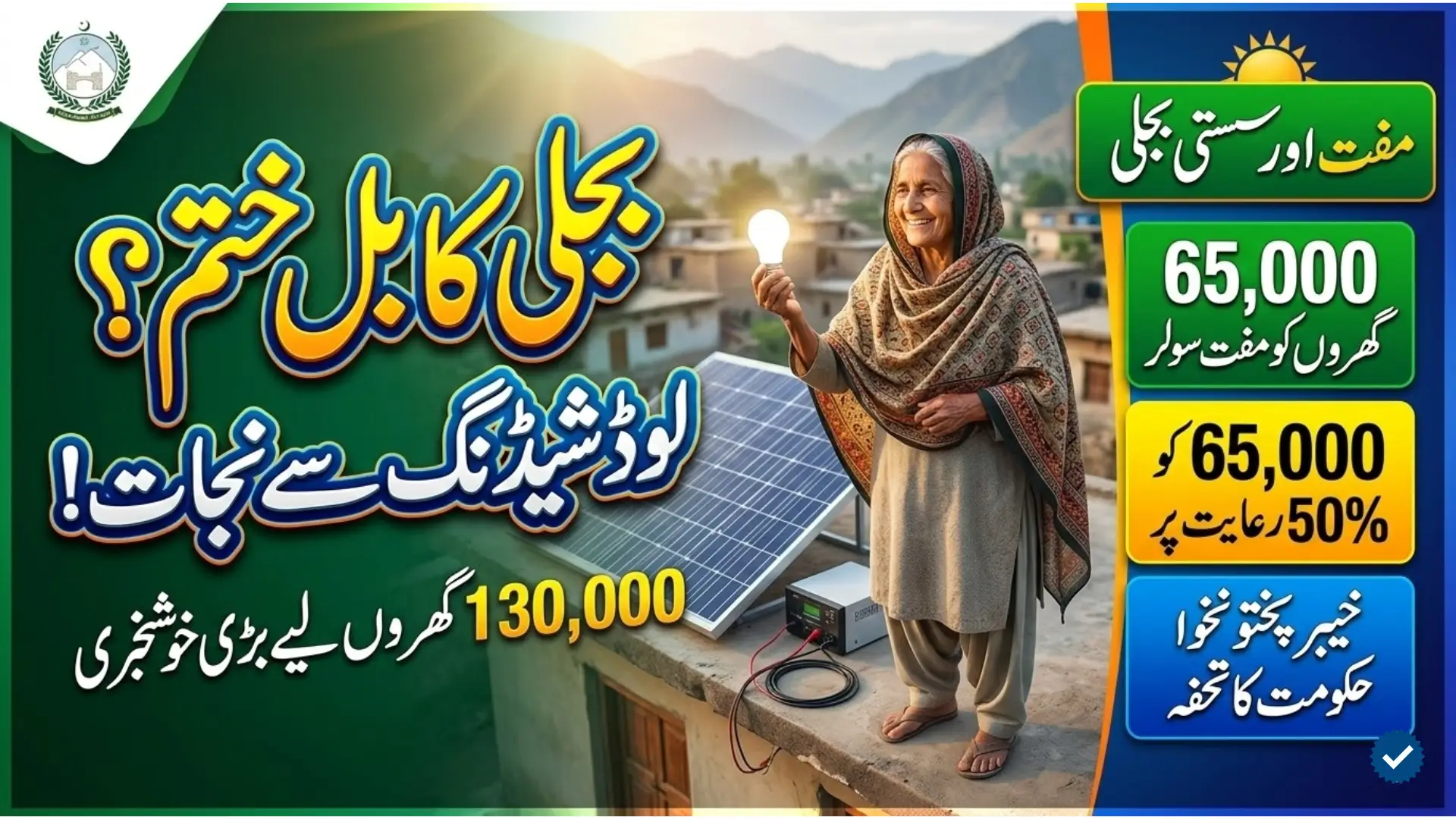
Khyber Pakhtunkhwa Household Solarization Scheme
The government of Khyber Pakhtunkhwa has announced a major initiative to provide solar energy to households across the province. This plan is known as the Khyber Pakhtunkhwa Household Solarization Scheme. The goal is to help families that struggle with electricity shortages or have no power connection. Solar systems will help reduce electricity costs and improve daily life.
The project will support thousands of families, especially those living in rural and remote areas. Many communities in the province still face power outages. Solar energy provides a clean and reliable solution. The scheme will also help promote renewable energy and reduce dependence on traditional electricity sources.
Key goals of the program include:
- Improve access to electricity in remote areas
- Support low-income households with free or subsidized solar systems
- Promote renewable and clean energy
- Reduce electricity bills for families
Punjab Green Property Certificate Launches to Prevent Land Fraud and Digitize Records
Government Decision to Start Solar System Distribution
The decision to begin solar system distribution was made during a meeting chaired by Chief Minister Muhammad Sohail Afridi in Peshawar. During the meeting, officials were directed to complete all required procedures quickly. The chief minister emphasized that the distribution process should begin without delay so that families can benefit as soon as possible.
Government departments have already started preparing for the project implementation. Officials explained the project details and confirmed that planning work has been completed. Once approvals are finalized, the government will start distributing solar units to eligible households across the province.
Important decisions from the meeting include:
- Immediate completion of administrative procedures
- Quick start of the solar system distribution process
- Priority support for vulnerable families
- Expansion of renewable energy in the province
Solar Systems for 130,000 Households Across the Province
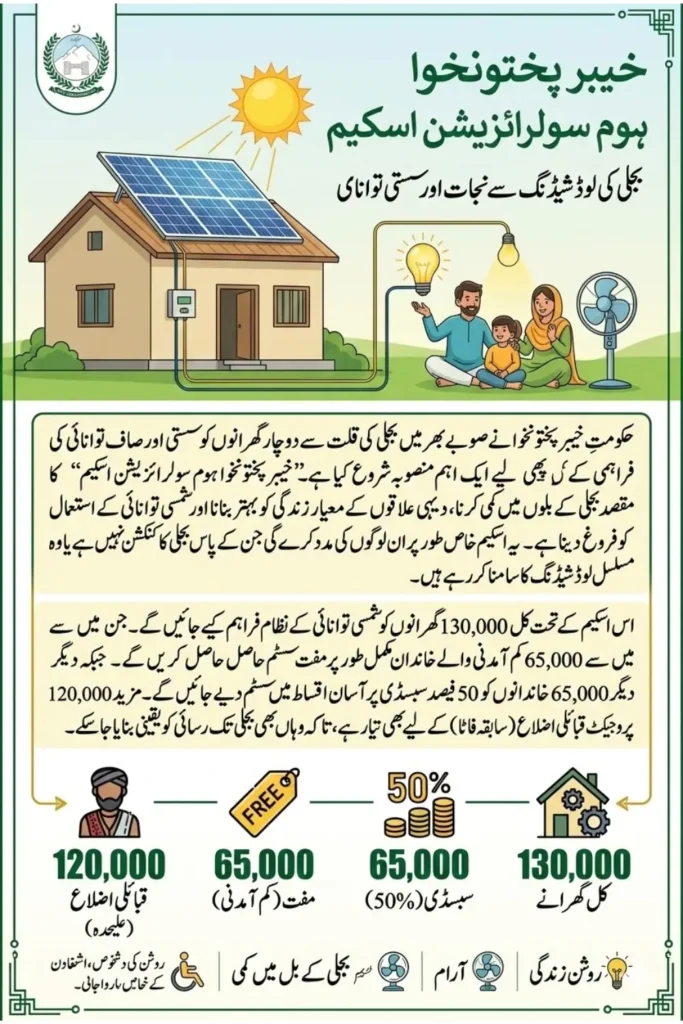
According to officials, the solarization project will cover about 130,000 households across the province. This includes families living in different districts as well as those in newly merged tribal districts. The government wants to ensure fair distribution based on the population of each district.
The scheme aims to reach households that face the biggest electricity challenges. Solar systems will provide reliable power for lights, fans, and small appliances. This will improve living standards and help families manage daily tasks more easily.
Distribution plan overview:
| Category | Number of Households | Support Type |
|---|---|---|
| Free solar systems | 65,000 | Fully funded by government |
| Subsidized systems | 65,000 | 50% subsidy with installments |
| Total households | 130,000 | Province-wide coverage |
Free Solar Systems for 65,000 Households
Under the solarization scheme, 65,000 households will receive solar systems completely free of cost. These units will be provided to families that cannot afford electricity solutions. The government wants to ensure that the poorest communities benefit from this initiative.
Solar systems will allow families to power essential appliances. This support will improve living conditions and help households reduce financial pressure from electricity expenses. Free solar units will mainly target vulnerable and low-income families.
Groups expected to benefit from free systems include:
- Widows and low-income women
- Persons with disabilities
- Families affected by natural disasters
- Households without electricity connections
MOFEPT and Cisco Free Online Technology Courses Launch to Boost Digital Skills in Pakistan
Subsidized Solar Systems for Another 65,000 Families
Another 65,000 households will receive solar systems at a subsidized rate. These families will pay only 50 percent of the system cost. The remaining amount will be covered by the provincial government. This support will make solar technology affordable for many families.
The subsidized solar units will be provided through an easy installment plan. Families can pay the remaining amount in small installments. This approach helps middle-income households shift to solar energy without financial burden.
Main benefits of subsidized systems include:
- Reduced upfront cost for solar installation
- Affordable installment payment plan
- Reliable electricity supply for homes
- Long-term savings on electricity bills
Additional Solar Project for Merged Districts
A separate solarization project is also being prepared under the Accelerated Implementation Program. This program focuses on the merged tribal districts where electricity access remains limited. The government plans to provide solar systems to 120,000 households in these areas.
This project aims to improve energy access in remote communities. Solar systems will help families meet their basic electricity needs. It will also support development in areas that have faced infrastructure challenges in the past.
Additional project highlights:
- Solar systems for 120,000 households in merged districts
- Focus on communities with limited electricity access
- Support for development and infrastructure improvement
Approval Process and Project Planning
The planning phase of the solarization scheme has already been completed. Officials confirmed that the PC-1 document for the project has been finalized. This document includes details about costs, distribution plans, and implementation strategies.
The project will now be presented to the Provincial Development Working Party for approval. Once the approval is granted, the government will start the official rollout of solar systems. Authorities expect the distribution process to begin soon after approval.
Punjab CM Rehmat Card Scheme Launches to Support Widows and Orphaned Children Apply Now
Key steps in the approval process include:
| Project Step | Description |
|---|---|
| PC-1 preparation | Project planning document finalized |
| Government review | Review by provincial authorities |
| PDWP approval | Final approval for project implementation |
| Distribution phase | Solar systems delivered to households |
Priority Groups for Solar System Distribution
The government has set clear criteria for selecting beneficiaries. Priority will be given to families that face the greatest economic challenges. This ensures that support reaches the people who need it the most.
Special focus will be placed on vulnerable groups. The aim is to improve living conditions for those who often struggle with limited resources and energy access.
Priority groups include:
- Widows
- Persons with disabilities
- Temporarily displaced persons
- Families affected by natural disasters
- Communities without electricity access
Impact of the Khyber Pakhtunkhwa Household Solarization Scheme
The Khyber Pakhtunkhwa Household Solarization Scheme will bring long-term benefits to thousands of families. Solar energy will provide a stable electricity source for households that experience frequent power outages. This will improve quality of life and help families manage daily activities more easily.
The project will also support the province’s renewable energy goals. Solar power reduces dependence on traditional electricity systems. It also promotes a cleaner and more sustainable energy future for the region.
Expected benefits include:
- Reduced electricity shortages
- Lower household energy costs
- Increased use of renewable energy
- Improved living conditions in rural areas
FAQs
What is the Khyber Pakhtunkhwa Household Solarization Scheme?
It is a government project that provides free and subsidized solar systems to households in Khyber Pakhtunkhwa to improve electricity access.
How many households will benefit from this scheme?
Around 130,000 households across the province will receive solar systems through free or subsidized support.
Who will receive free solar systems under the program?
Low-income families, widows, disabled persons, and households without electricity will be given priority for free solar units.
Will families need to pay for subsidized solar systems?
Yes. Families receiving subsidized units will pay 50 percent of the cost through easy installment payments.
When will the solar system distribution start?
Distribution will begin after project approval from the Provincial Development Working Party and completion of administrative procedures.
8171 Taleemi Wazaif Parents’ Simple Guide 2026 to CNIC Check and Student Payments