
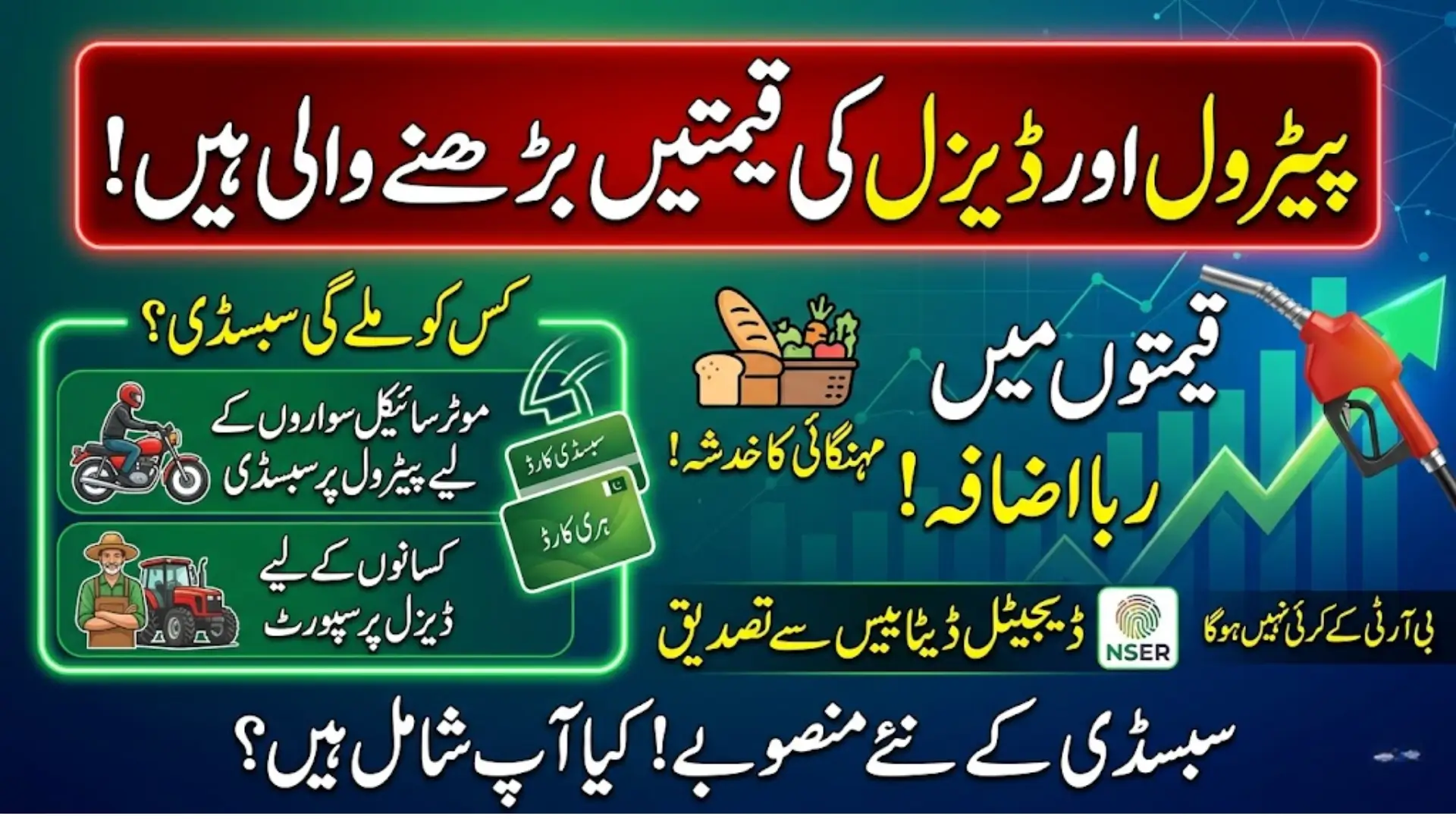
Petrol and Diesel Prices in Pakistan Likely to Increase
Petrol and diesel prices in Pakistan are expected to rise soon. The government is planning to adjust fuel prices due to higher import costs. This decision may affect daily life and transportation expenses.
Authorities are trying to manage the situation carefully. They want to reduce the financial burden on citizens while controlling economic pressure. A targeted subsidy plan is also under discussion.
- Fuel prices linked to global oil rates
- Government balancing cost and relief
- Impact expected on public and economy
CM Punjab Loan Scheme 2026: Interest Free Financial Support for Small Businesses and Youth
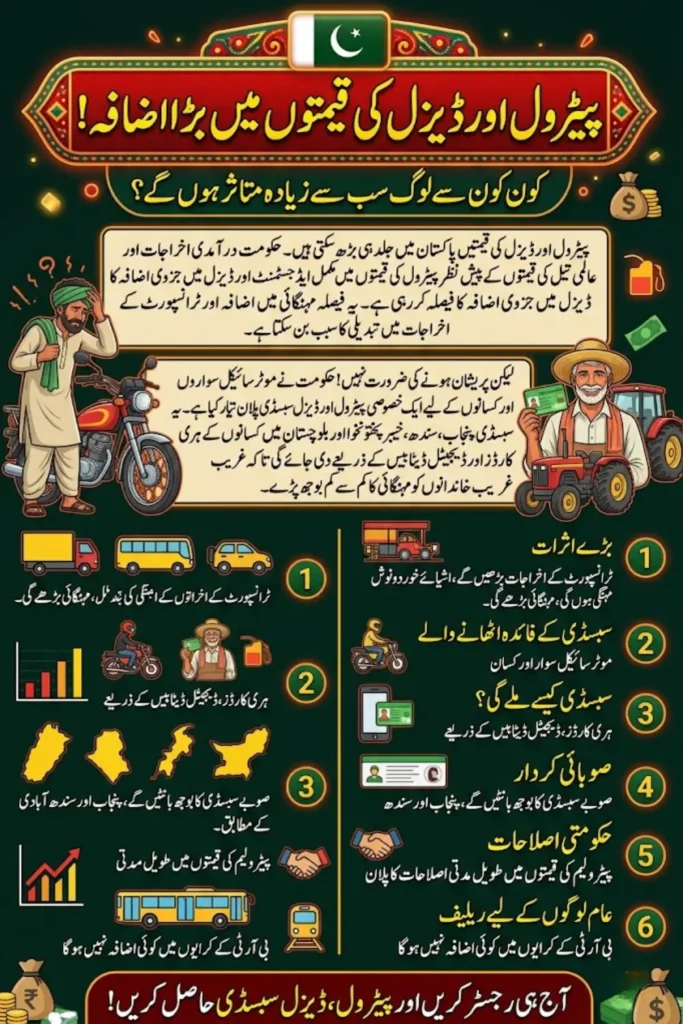
Expected Increase in Petrol and Diesel Prices in Pakistan
Petrol and diesel prices in Pakistan may increase within a few days. The final increase will depend on global oil market trends. Officials are reviewing updated calculations before making an announcement.
The government is considering passing full petrol costs to consumers. For diesel, only partial adjustment may be applied. This approach aims to control inflation and transport costs.
- Petrol may see full price adjustment
- Diesel may have partial increase
- Final rates depend on global oil prices
Government’s Fuel Subsidy Strategy
The government is working on a targeted subsidy system. This plan focuses on helping low-income groups. Motorcyclists and farmers are the main beneficiaries.
Federal and provincial governments are coordinating efforts. The aim is to provide relief without increasing the fiscal deficit. This system will help distribute subsidies more effectively.
- Targeted subsidy for specific groups
- Focus on farmers and bike users
- Joint effort by federal and provinces
Role of Key Government Officials
The decision was discussed in a high-level meeting. Finance Minister Muhammad Aurangzeb led the session. Chief ministers and senior officials also attended.
Top leadership, including the president and prime minister, reviewed the plan. Their goal is to ensure fair distribution of subsidies. Coordination is key for smooth implementation.
- Meeting led by finance minister
- Involvement of top leadership
- Focus on national coordination
Current Fuel Price Gap and Financial Burden
There is a large gap between local and import-based fuel prices. Petrol has a gap of around Rs. 100 per litre. Diesel has a gap of over Rs. 200 per litre.
This difference creates pressure on the national budget. The government must decide how much cost to pass on to consumers. The rest will be covered through subsidies.
BISP Digital Wallet Launch Date 2026 And Complete Payment System Details Explained
| Fuel Type | Price Gap (Approx) |
|---|---|
| Petrol | Rs. 100 per litre |
| Diesel | Rs. 200+ per litre |
- Large gap between local and global prices
- Government covering part of the cost
- Decision needed on price adjustment
Subsidy Spending and Future Limits
The government has already spent a large amount on fuel subsidies. Around Rs. 129 billion has been used in recent weeks. This shows the scale of financial support.
Officials plan to limit total subsidies to Rs. 158 billion. This limit is necessary to control fiscal pressure. It also increases the need for shared responsibility.
- Rs. 129 billion already spent
- Total cap set at Rs. 158 billion
- Pressure to manage spending
Provincial Role in Subsidy Sharing
Provinces are asked to share the subsidy burden. Punjab and Sindh will contribute based on population. Other provinces will contribute based on fuel usage.
This system ensures fair distribution of financial responsibility. It also supports coordination between all regions. Each province will play a role in relief efforts.
| Province | Contribution Basis |
|---|---|
| Punjab | Population share |
| Sindh | Population share |
| Khyber Pakhtunkhwa | Fuel consumption |
| Balochistan | Fuel consumption |
- Shared subsidy responsibility
- Different criteria for provinces
- National coordination approach
BISP 8171 Eligibility Status Check 2026 Online Complete Guide & Details
Relief Measures for Public and Farmers
Special relief measures are being planned. Motorcyclists may receive subsidized petrol. Farmers will get diesel support through official programs.
Sindh will use its Hari Card system for farmers. Other provinces are also preparing similar systems. These steps aim to reduce financial pressure on key sectors.
- Petrol subsidy for motorcyclists
- Diesel support for farmers
- Use of digital databases
Impact on Transport and Inflation
Diesel prices directly affect transport costs. Higher transport costs can increase food prices. This creates inflation concerns for policymakers.
Authorities have decided not to increase BRT fares. This step will help urban commuters. However, price differences may appear in other areas.
- Diesel impacts transport sector
- Risk of rising food prices
- BRT fares to remain unchanged
Estimated Cost of Subsidy Program
The subsidy program requires large financial resources. Weekly costs may range from Rs. 15 to 18 billion. In some cases, it may rise to Rs. 30 billion.
This cost depends on global oil prices. If prices increase further, the burden will grow. The government plans to manage this until the fiscal year ends.
- Weekly cost up to Rs. 18 billion
- Possible increase to Rs. 30 billion
- Linked to global oil trends
Eid al-Adha in Pakistan 2026 Expected Date, Moon Sighting Updates, and Holiday Plans
Future Petroleum Pricing Reforms
The government is planning long-term reforms. These reforms aim to improve the fuel pricing system. The focus is on reducing fiscal pressure.
A coordinated subsidy framework will be introduced. This will ensure better targeting of relief. It will also help control inflation in the long run.
- Plan for pricing reforms
- Focus on sustainability
- Better subsidy targeting
FAQs
Why are petrol and diesel prices increasing in Pakistan?
Prices are rising due to higher global oil costs. Import expenses are increasing for the government.
Who will get fuel subsidies in Pakistan?
Motorcyclists and farmers are expected to benefit. Targeted programs will support these groups.
How much subsidy has the government spent so far?
Around Rs. 129 billion has already been used. The total limit is set at Rs. 158 billion.
Will transport fares increase after fuel price hike?
BRT fares will not increase for now. However, other transport costs may rise.
How are provinces contributing to subsidies?
Punjab and Sindh will contribute by population. Other provinces will contribute based on fuel use.
BISP Payment Receive Through 6 Banks Get BISP Bank Payment Detail