
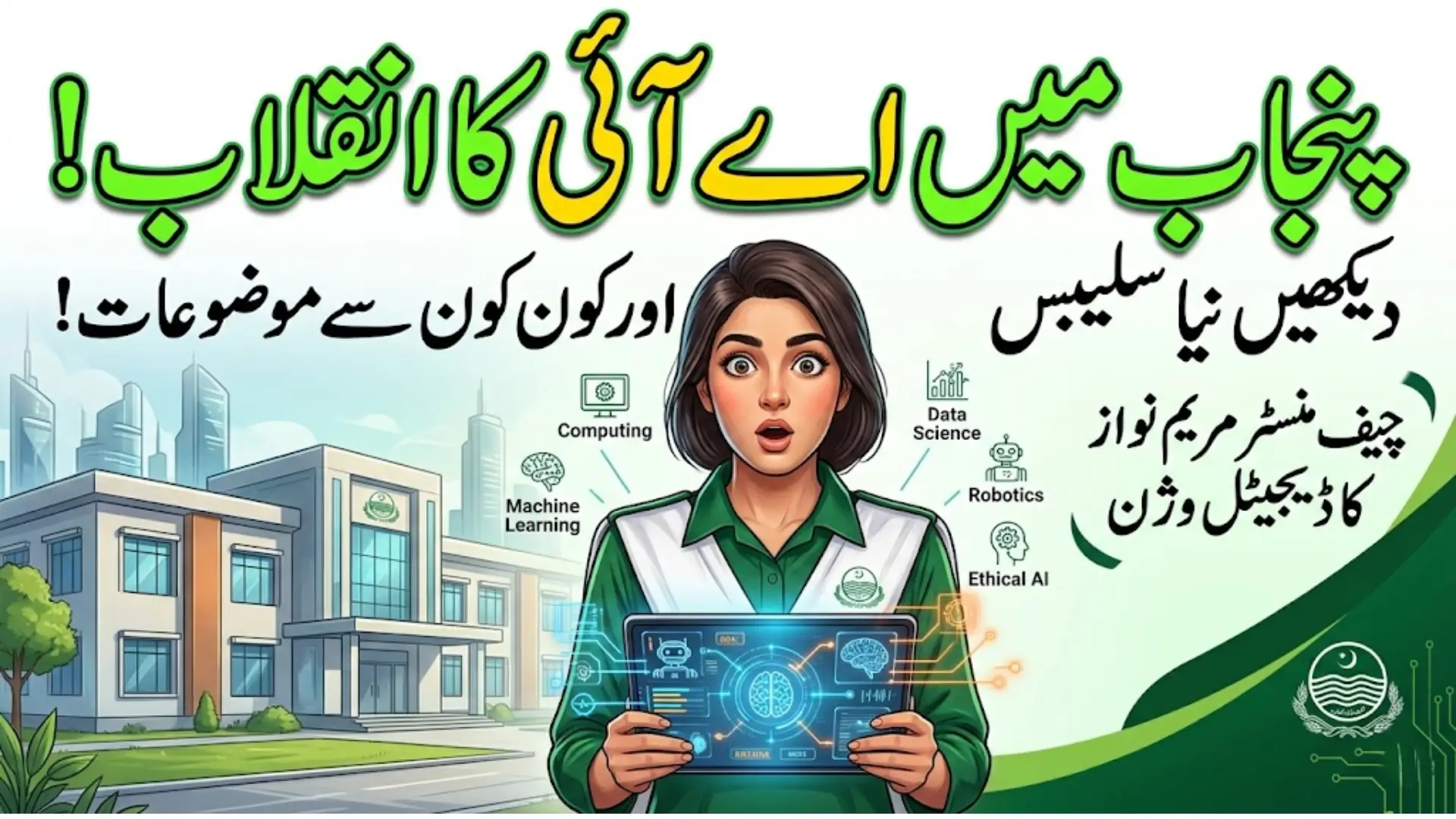
Punjab AI Curriculum Introduces
The Punjab Education, Curriculum, Training and Assessment Authority (PECTAA) has taken a major step forward. It has officially introduced an artificial intelligence curriculum for students across Punjab. This initiative aims to build strong digital skills from an early age. The move aligns with the vision of Chief Minister Maryam Nawaz for a digitally prepared generation.
The curriculum is not just about teaching technology. It is about preparing young minds to think critically, solve real problems, and use AI responsibly. Punjab is now moving toward a future where students go beyond using technology and start creating with it.
Ultimate Guide to Verifying Eligibility and Receiving Payments in the Benazir Kafalat 8171 Program
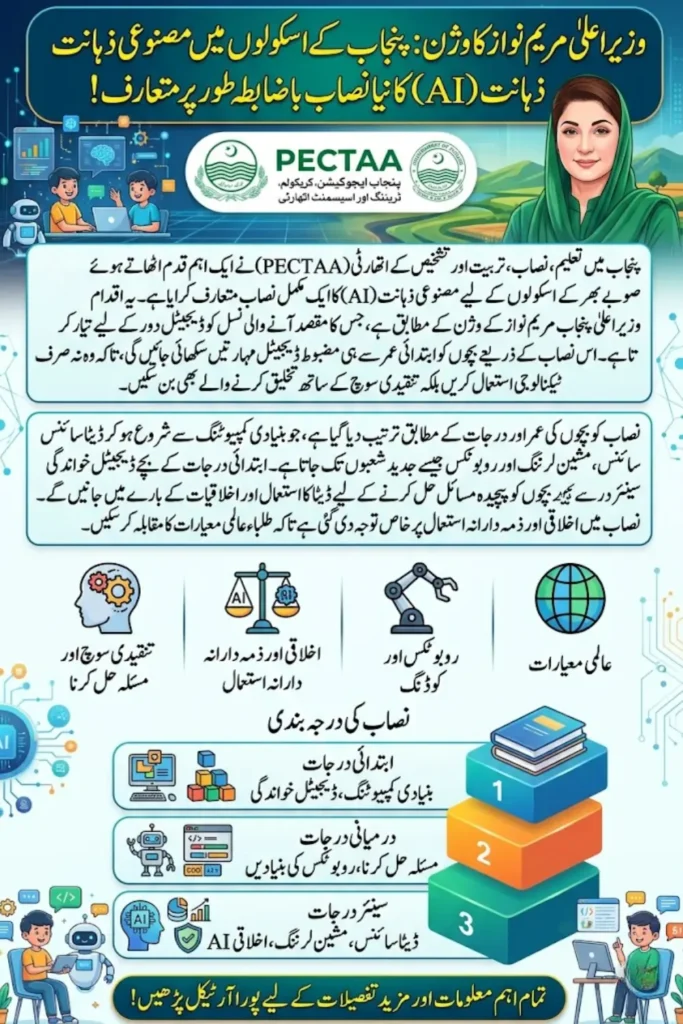
PECTAA Launches AI Curriculum in Punjab on Chief Minister’s Timeline
PECTAA developed this curriculum within the timeline set by Chief Minister Maryam Nawaz. This shows strong political commitment to digital education reform. The authority moved quickly to draft a structured framework that meets both national goals and global standards.
PECTAA CEO Muhammad Musa Ali Bokhari presented the first draft to the provincial education minister and the parliamentary secretary. This early presentation signals that the rollout process is already underway. Leadership at the highest level is actively reviewing the AI curriculum before it reaches classrooms.
Topics Covered in the Punjab AI Curriculum
The curriculum covers a broad range of subjects. It starts from basic computing and moves toward advanced digital fields. Students will gain knowledge progressively as they move through different grade levels.
Key topics included in the curriculum:
- Basic computing concepts
- Data science fundamentals
- Machine learning
- Robotics
- Ethical AI and responsible technology use
This wide coverage ensures no student is left behind. Beginners start with simple concepts. Advanced learners explore machine learning and robotics. Every level builds on the previous one, creating a smooth learning path.
8171 Tracking Installment Portal 2026 Complete Guide for Payment & Eligibility Check
Age-Appropriate Framework for Progressive Learning
The framework is carefully structured by age group. Younger students begin with foundational digital concepts. Older students move into more complex areas like data science and AI governance. This approach makes learning manageable and effective at every stage.
The goal is clear. Students should not just use technology passively. They should understand it deeply and apply it creatively. The curriculum pushes students toward innovation and practical problem-solving rather than simple screen time.
| Grade Level | Focus Area |
|---|---|
| Early grades | Basic computing and digital literacy |
| Middle grades | Problem-solving, coding basics, and robotics |
| Senior grades | Data science, machine learning, and ethical AI |
Global Standards Meet Local Needs
PECTAA designed the curriculum with a global mindset. It follows international benchmarks used in leading education systems around the world. At the same time, it stays rooted in Punjab’s local context and student needs.
The curriculum places strong emphasis on:
- Ethics and responsible digital behaviour
- AI governance and policy awareness
- Creativity and independent thinking
- Digital citizenship in a local setting
This balance is important. Students must be globally competitive. But they must also understand technology within their own cultural and social environment. PECTAA has tried to achieve both goals in one framework.
Apni Zameen Apna Ghar Program: Punjab Government Launches Free 3-Marla Plots for Homeless Families
Curriculum Goals: Ethics, Creativity, and Digital Citizenship
Ethics is a central pillar of this AI curriculum. Students learn not just how AI works but also how to use it responsibly. This prepares them to become thoughtful digital citizens rather than passive technology users.
Creativity and governance are also key focus areas. Students are encouraged to think beyond textbooks. They are trained to ask questions, design solutions, and consider the social impact of technology. These are the skills that the modern digital economy demands.
| Curriculum Focus | Purpose |
|---|---|
| Ethics | Responsible and fair use of AI |
| Governance | Understanding AI policy and regulation |
| Problem-solving | Applying skills to real-world challenges |
| Digital citizenship | Safe and responsible online behaviour |
Preparing Punjab Students for the Digital Era
The digital world is changing fast. Jobs, industries, and daily life are all being reshaped by artificial intelligence. Punjab’s AI curriculum prepares students to keep up with these changes from a young age.
PECTAA’s initiative gives students the tools to adapt, compete, and lead. Instead of waiting for higher education to introduce these topics, Punjab is bringing AI literacy into schools early. This gives the next generation a head start in a technology-driven world.
BISP 8171 Registration: ویب پورٹل پر آن لائن اپلائی کرنے کی تازہ ترین معلومات
FAQs
What is the PECTAA AI curriculum? It is a structured educational framework introduced by the Punjab Education, Curriculum, Training and Assessment Authority to teach students artificial intelligence and digital skills from an early age.
Which topics does the AI curriculum cover? It covers basic computing, data science, machine learning, robotics, and ethical AI, structured progressively by grade level.
Who presented the first draft of the curriculum? PECTAA CEO Muhammad Musa Ali Bokhari presented the first draft to the provincial education minister and parliamentary secretary.
Does the curriculum follow global standards? Yes, it incorporates global education benchmarks while keeping content relevant to local needs and the Pakistani context.
What is the main goal of this initiative? The main goal is to prepare Punjab students to adapt to the evolving digital era and move from basic technology use toward innovation and practical application.