
Electricity-Free Cooling System
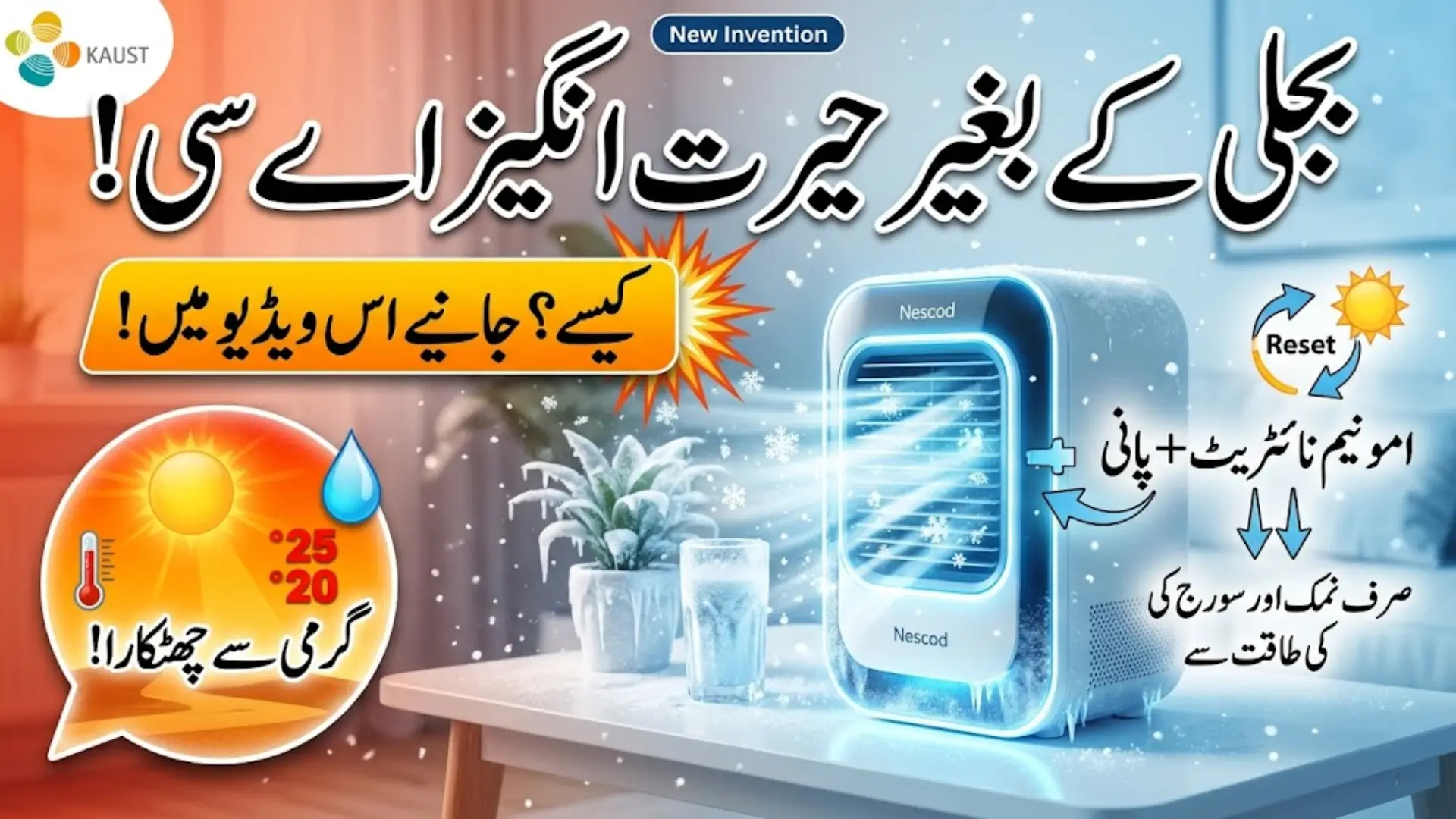
The electricity-free cooling system is a new innovation designed to reduce heat without using power. Researchers at King Abdullah University of Science and Technology developed this system to support areas with limited electricity. It aims to provide simple and affordable cooling.
This system is useful for regions facing high temperatures and energy shortages. It reduces dependence on traditional air conditioning systems. Key points include:
- Works without electricity
- Uses simple materials and solar energy
- Designed for hot and remote areas
MG HS Second Generation Pakistan Launch with Hybrid and Plug-in Hybrid Check Variants
Need for Electricity-Free Cooling System
Global temperatures are rising quickly, and heatwaves are becoming more frequent. Many regions face extreme heat but lack reliable electricity. This creates a strong need for alternative cooling solutions.
More than 700 million people still live without electricity. This increases the demand for low-cost and sustainable cooling systems. Important factors include:
- Rising global temperatures
- Limited power access in many regions
- Growing demand for affordable cooling
How the Electricity-Free Cooling System Works
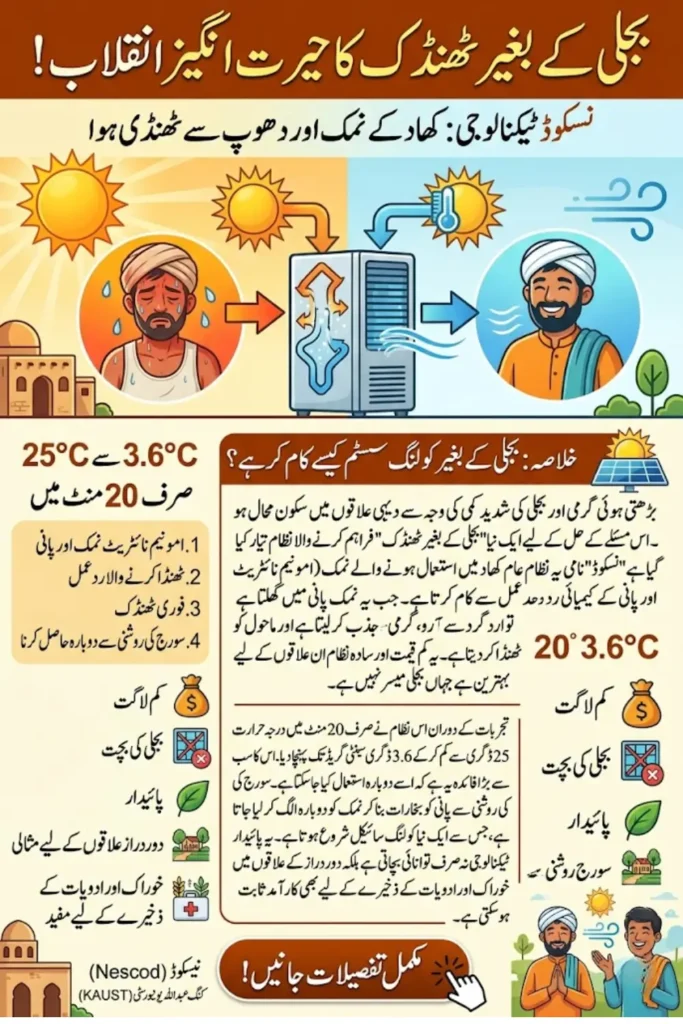
The electricity-free cooling system is called Nescod. It stands for No Electricity and Sustainable Cooling on Demand. It uses ammonium nitrate mixed with water to create cooling.
This process is based on endothermic dissolution. When ammonium nitrate dissolves, it absorbs heat from the surroundings. This lowers the temperature effectively. Key features include:
- Uses ammonium nitrate and water
- No need for compressors or motors
- Based on natural heat absorption process
Cooling Performance and Efficiency
The electricity-free cooling system showed strong results during testing. It reduced temperature from 25°C to 3.6°C in just 20 minutes. This makes it highly effective for practical use.
Researchers found it more efficient than other salts like ammonium chloride. The system provides fast and reliable cooling. Key highlights include:
- Rapid temperature drop
- Higher efficiency than other salts
- Suitable for real-world use
NADRA Self Service Kiosk System Pakistan Introduced to Improve CNIC Services and Reduce Waiting Time
Key Performance Data
| Feature | Result |
|---|---|
| Initial Temperature | 25°C |
| Final Temperature | 3.6°C |
| Time Taken | 20 minutes |
| Cooling Method | Salt and water reaction |
Role of Ammonium Nitrate in the System
Ammonium nitrate is the main material used in this cooling system. It is commonly available and widely used in fertilizers. Its properties make it ideal for cooling applications.
It is also low-cost and easy to store. This makes the system practical for large-scale use. Key advantages include:
- Affordable and widely available
- Easy storage and handling
- Strong cooling effect
Solar-Powered Regeneration Cycle
After cooling, the system can be reused without electricity. Solar energy is used to evaporate water from the solution. This allows the salt to crystallize again.
This process resets the system for another cooling cycle. It makes the technology sustainable and efficient. Key benefits include:
- Uses solar energy for regeneration
- Allows repeated use
- Reduces waste through water recovery
Environmental Benefits of Electricity-Free Cooling System
The electricity-free cooling system helps reduce energy use. It lowers the need for traditional air conditioning systems. This reduces pressure on electricity grids.
It also supports environmental protection by lowering carbon emissions. The system promotes clean and green technology. Key benefits include:
- Reduced electricity consumption
- Lower carbon emissions
- Eco-friendly cooling solution
Most Profitable Banks in Pakistan UBL Leads with Record Profits Amid Industry Shifts
Global Applications of Electricity-Free Cooling System
This cooling system has many practical uses worldwide. It can be used in areas with limited or no electricity. It is especially useful in hot climates.
The system can also support food storage and healthcare needs. It helps preserve temperature-sensitive items. Key applications include:
- Cooling buildings in remote areas
- Food preservation and storage
- Transport of temperature-sensitive goods
Key Features of Electricity-Free Cooling System
| Feature | Details |
|---|---|
| System Name | Nescod |
| Energy Source | Solar energy |
| Power Requirement | No electricity |
| Main Material | Ammonium nitrate |
| Usage Areas | Remote and hot regions |
Future Potential of Electricity-Free Cooling System
The electricity-free cooling system has strong future potential. It can be expanded for use in many countries. It offers a practical solution for energy challenges.
Researchers believe it can support communities with limited resources. It may also help reduce global energy demand. Future possibilities include:
- Large-scale production
- Use in developing regions
- Support for climate solutions
Conclusion
The electricity-free cooling system is a simple and effective innovation. It provides cooling without electricity using salt and solar energy. This makes it ideal for hot and remote areas.
It can reduce energy use and support sustainable development. With further growth, it can play an important role in global cooling solutions.
FAQs
What is an electricity-free cooling system?
It is a system that cools air without using electricity. It uses chemical reactions and solar energy.
What is Nescod technology?
Nescod is a cooling system that uses ammonium nitrate and water. It works without power.
How effective is this cooling system?
It can reduce temperature from 25°C to 3.6°C. It works within 20 minutes.
What are the benefits of this system?
It saves energy and reduces emissions. It is also low-cost and reusable.
Where can this system be used?
It can be used in remote areas and hot regions. It is useful for cooling and storage.
Gold Prices in Pakistan Rise for Second Day After Global Market Recovery